The Andaman and Nicobar Islands used to carry a reputation among foreign travelers as one of India's more bureaucratically demanding destinations, largely because of a Restricted Area Permit that once applied to almost every foreign visitor. That reputation is now mostly outdated. Since 2018, the majority of the islands foreign tourists actually want to see, Port Blair, Havelock, Neil, and the wider tourist circuit, no longer require that separate permit at all. What remains is a smaller, more specific set of exceptions, and understanding exactly where those exceptions apply matters more than the general rules do.
IVC Visas sets out what your India visa covers on arrival in Port Blair, where the old Restricted Area Permit still genuinely applies, and where certain areas stay closed to every traveler from Canada, Austria, Greece or regardless of any nationality or paperwork.
Your India Visa Is Still the Starting Point!
Nothing about the Andaman Islands changes the underlying requirement that got you into India in the first place. Foreign nationals arriving in Port Blair, whether by air or sea, must show a valid passport and a valid Indian visa at the immigration counter for verification, exactly as at any other authorised port of entry.
For most tourists, that means the India e-Tourist Visa, applied for and approved before departure, the same category that covers the rest of India.
There is no separate visa type for the Andaman Islands. What changes is not your visa, but a second layer of clearance that historically sat on top of it, and which now applies to a far narrower group of travelers than it used to.
How to apply for your India e-Visa before this trip:
- Confirm your nationality is eligible for the India e-Visa scheme through the official India visa portal or with IVC Visas.
- Select the e-Tourist Visa category, choosing a duration that comfortably covers your full itinerary, including any mainland India stops before or after the islands.
- Upload a compliant passport-style photo and a clear scan of your passport's bio page.
- Submit the application and pay the applicable fee for your nationality, plus the standard bank transaction charge.
- Once your status reads GRANTED, download your ETA (Electronic Travel Authorization) from the government portal, not your approval email, which is a separate document , and print a physical copy to carry alongside your passport.
Apply at least 2 to 3 weeks before departure. Andaman itineraries are often built around fixed ferry bookings and accommodation that doesn't always refund easily, so a delayed or rejected e-Visa application is a genuinely costly mistake to make this close to travel dates.
Unsure which e-Visa duration fits an Andaman-plus-mainland trip? IVC Visas determines the exact category of India visa that aligns with your purpose of visit.
Most Tourist Islands No Longer Require a Separate Permit
As of 2018, the Indian government relaxed the Restricted Area Permit regime, notified under the Foreigners (Restricted Areas) Order, 1963, for a defined list of inhabited islands. That relaxation has been periodically extended since, and under the current notification, it runs until December 31, 2027; it's worth a quick check on the Andaman & Nicobar Tourism website if you're reading this close to that date.
Under the current relaxation:
- 29 islands are fully excluded from the RAP requirement, including Port Blair, Havelock (officially Swaraj Dweep), Neil Island (officially Shaheed Dweep), South Andaman, Middle Andaman, Baratang, and Long Island, among others.
- 11 additional islands are exempted from RAP for day visits only, meaning no overnight stay is permitted on these without a permit, even though a daytime visit requires none. This distinction matters if your itinerary includes an overnight stop on one of the less-central islands.
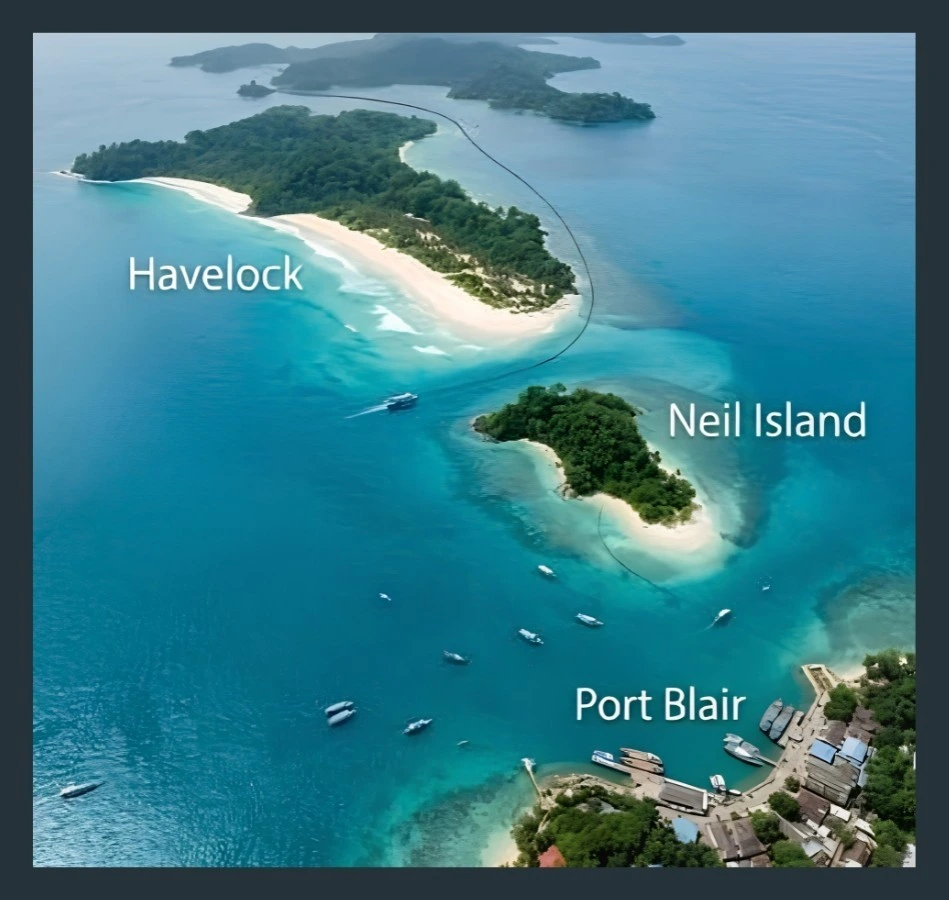
For the large majority of foreign tourists, whose trip revolves around Port Blair, Havelock, and Neil, the practical requirement is simple: show your passport and e-Visa at the immigration counter on arrival, and that's the substantive step. A fair amount of older content online still describes the Andamans as requiring a permit for any foreign visitor, which is no longer accurate for the standard tourist circuit.
Where the Restricted Area Permit Still Applies
The exceptions that remain are specific rather than general, and they fall into two categories.
🌍 By nationality or origin
Citizens of Afghanistan, China (including Hong Kong and Macau), and Pakistan, along with foreign nationals who have origin in these countries, continue to require a Restricted Area Permit. "Origin" here is defined broadly by the Ministry of Home Affairs' RAP notification: a person whose parent or grandparent was born in and permanently resident in one of these countries, or who has held citizenship of one of these countries at any point, falls under this requirement. It's worth checking carefully if your own background touches any of these countries even indirectly, rather than assuming the rule applies only to current passport holders.
📍 By specific destination
Mayabunder and Diglipur specifically require a Restricted Area Permit for citizens of Myanmar, even though the general 2018-2027 relaxation would otherwise cover these areas for most other nationalities.
How to Actually Apply for a Restricted Area Permit?
If one of the exceptions above applies to your trip, here's what the process genuinely involves, since this is the part most guides skip past.
Where you can apply:
- At an Indian Mission overseas, before you travel, the slower but most reliable route if your nationality requires prior Ministry of Home Affairs approval.
- At the Foreigners Regional Registration Office (FRRO) in Delhi, Mumbai, Chennai, or Kolkata, if you're already in India before heading to Port Blair.
- On arrival at Port Blair, from the Immigration Authorities directly, generally the fastest option where it's available, often processed within 30 to 60 minutes.
What you'll typically need:
- A completed RAP application form
- Your passport, plus photocopies of the bio page
- A valid Indian visa (your e-Visa or regular visa)
- Recent passport-sized photographs (carrying at least two is sensible)
- Your return or onward travel itinerary
The one detail that changes everything for PRC nationals:
For citizens of Afghanistan, China, and Pakistan specifically, the RAP is granted only after prior approval from the Ministry of Home Affairs. This approval process takes real time and cannot be obtained spontaneously on arrival, which means arriving at Port Blair without it already secured carries a genuine risk of being refused entry to the islands rather than simply processed at the counter. If this applies to you, start this process through an Indian Mission in your home country well before booking flights.
Once issued, a RAP is generally valid for 30 days, extendable by a further 15 days with permission from the Superintendent of Police in Port Blair.
What Stays Closed Regardless of Permits or Nationality
This is the part of the Andaman Islands system that operates on a different logic entirely, and it's worth understanding clearly rather than treating it as just another permit tier.
🚩 The islands' tribal reserves exist to protect the indigenous communities who live there, and they are not open to tourism under any circumstances: no permit, no special arrangement, no exception made for genuine curiosity or research interest without formal, separately granted clearance. This applies regardless of your nationality, your visa status, or whether you've secured a Restricted Area Permit for other purposes.
🚩 The road connecting Port Blair to Baratang passes through the Jarawa Tribal Reserve, and this specific stretch operates under strict rules: vehicles travel in a timed, escorted convoy, there is no stopping along the route, and no photography or filming is permitted at any point during the crossing. This is treated as a serious matter under Indian law, not a soft guideline, and it applies to every traveler making that specific journey.
🚩 The Nicobar Islands, beyond a small permitted area around Campbell Bay in Great Nicobar, remain largely closed to tourism. Where any access to tribal areas within the Nicobars is granted at all, it is through a Tribal Pass issued for specific, non-tourism purposes, researchers, officials, or those with a genuine invitation from the tribal community itself, not something available to a standard visitor.
🚩 North Sentinel Island, home to the Sentinelese people, is entirely off-limits, and this is among the most strictly enforced restrictions anywhere in India, reflecting both legal protection and the documented risk to uncontacted communities from any outside contact.
🚩 Wildlife Sanctuaries and National Parks Carry Their Own Separate Permission: Beyond the tribal reserve restrictions, certain natural areas within the Andaman Islands, including specific wildlife sanctuaries and sections of the Mahatma Gandhi Marine National Park, require their own approval from the Andaman and Nicobar Forest Department, distinct from both your visa and any Restricted Area Permit. This applies to Indian and foreign visitors alike, and typically operates through your tour operator or dive centre if your itinerary includes activities like diving or snorkelling within these protected zones, rather than something you'd need to arrange independently in most cases.
Putting This Together for a Standard Andaman Trip
For the overwhelming majority of foreign tourists, whose plans centre on Port Blair, Havelock, and Neil Island, the practical requirement is straightforward: a valid India e-Visa, your passport shown and verified at the Port Blair immigration counter on arrival, and no separate Restricted Area Permit at all. The exceptions described above apply to a genuinely narrow group, specific nationalities with specific origin connections, specific destinations like Mayabunder and Diglipur, and the tribal reserve areas that stay closed to everyone regardless of paperwork.
If your own background or itinerary touches any of these specific exceptions, the right approach is to confirm your exact requirement well before booking flights or accommodation, since arriving at Port Blair without a Restricted Area Permit that was required in advance, particularly one needing prior Ministry of Home Affairs approval, creates a real risk of being turned back at exactly the point your trip was meant to begin.
Start With the Document That Gets You to Port Blair in the First Place
Every layer of the Andaman Islands' entry system sits on top of one foundational requirement, a correctly approved India visa. Whether your trip needs nothing beyond that or requires the additional Restricted Area Permit specific to your background or destination, the visa itself is where the process starts, and it's worth getting right well before you're standing at Port Blair's immigration counter.
At IVC Visas, we review your India e-Visa application, photo, and documents before submission, on both standard and express service, so that foundation is solid before you start layering the rest of an Andaman itinerary on top of it.
Check your eligibility and start your application here, or get in touch with our team if anything about your specific nationality or itinerary raises a question before you book.
Disclaimer: IVC Visas is an independent visa service provider. We assist with application preparation and submission to official government portals for India e-Visa applications. Restricted Area Permits, tribal reserve access, and forest or wildlife sanctuary permissions for the Andaman and Nicobar Islands are handled separately through the relevant Indian authorities and are outside the scope of what IVC Visas processes. Final visa approval decisions are made solely by Indian immigration authorities. All information is based on current regulations as prescribed by the Government of India, which may change. Always verify the latest requirements before travel.