Darjeeling built its reputation on tea, mist, and a toy train that still climbs the same route it did under British rule. It sits in West Bengal, fully open, fully unrestricted, and genuinely one of the most accessible corners of the Himalayas for a foreign traveler holding nothing more than a valid India visa. Cross a border a few hours further, into Sikkim or the states beyond it, and the rules stop being that simple, and they changed again as recently as late 2024, in a shift a surprising amount of travel content online still hasn't caught up with.
This piece walks the region honestly, state by state, so India e-visa holders from South Korea, Belgium, Chile or anywhere know exactly where your India visa is the whole story, and where it's only the first document of several.
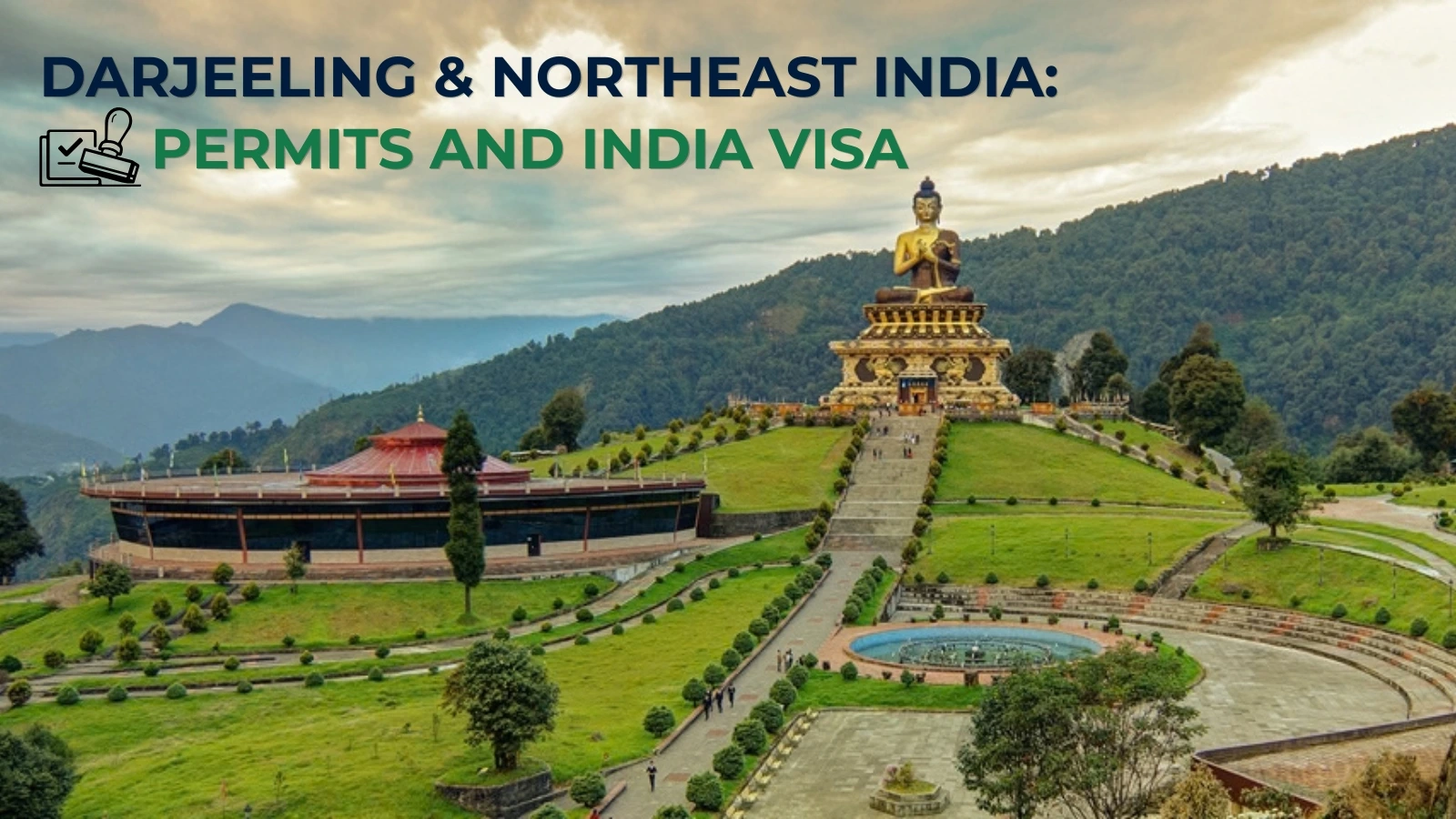
Darjeeling First, Because It's the Easy Part
West Bengal, including Darjeeling and the surrounding hill circuit through Kalimpong and Mirik, sits entirely outside India's Protected and Restricted Area system. No special permit, no additional paperwork, no prior clearance required beyond a standard, valid India visa. For foreign tourists, the correct category is almost always the India e-Tourist Visa, applied for and approved before you fly, exactly as it would be for any other unrestricted part of the country.
The reason Darjeeling gets folded into conversations about Northeast permits at all comes down to geography, not bureaucracy. It's the natural staging point for travelers heading onward into Sikkim, historically reached by road from Bagdogra or Siliguri before continuing up toward Gangtok, and that's precisely where the picture changes.
Sikkim: Open for the Most Part, Restricted at the Edges
Sikkim doesn't require blanket special permission the way some of its neighbours do. Gangtok, Rumtek Monastery, Pelling, and the state's main tourist circuit are accessible on a standard India visa alone, and this covers the majority of what most foreign visitors actually plan a Sikkim trip around.
What changes is the border-facing fringe, and it's worth naming these places specifically, because they're exactly the ones that tend to appear on wish lists. Nathu La Pass, sitting on the historic trade route into Tibet, and Tsomgo Lake, also called Changu Lake, both require a Restricted Area Permit. So does the high route north toward Lachen, Lachung, and Gurudongmar Lake, one of the highest lakes in the world and a genuine highlight for travelers who make it that far. All of this sits under the Foreigners (Restricted Areas) Order, 1963, the same legal framework that governs restricted zones elsewhere in India.
This is, in other words, the part of a Sikkim itinerary most foreign travelers actually want, and it's also the part that needs the extra step. The permit is arranged, in practice, almost entirely through a registered local travel agent as part of your booking, rather than something you'd typically pursue independently. Build this into your planning at the point you're choosing an operator, not as an afterthought once you've already arrived in Gangtok, since agents in Sikkim are well accustomed to bundling the permit into a standard North Sikkim package.
The Four States That Changed the Rules in 2024
This is the section worth reading carefully if you've seen conflicting information elsewhere, because a lot of it, understandably, hasn't been updated.
📌 Arunachal Pradesh, Nagaland, Manipur, and Mizoram require a Protected Area Permit, in full, for every foreign national, for the entire state.
Arunachal Pradesh has held this requirement consistently for years, under the Foreigners (Protected Areas) Order, 1958, without the relaxations its neighbours briefly enjoyed. Nagaland, Manipur, and Mizoram are the ones where the story actually shifted: between roughly 2010 and 2022, these three states benefited from a relaxation that let foreign tourists visit without the permit at all, part of a broader push at the time to open up Northeast tourism. That relaxation was withdrawn by a Ministry of Home Affairs circular dated 17 December 2024, on security grounds. As things currently stand, foreign nationals need a Protected Area Permit for all four of these states, with no exemption remaining for Manipur, Mizoram, or Nagaland.
📌 If your research on this region predates 2025, treat it with real caution.
Blog posts, forum answers, and even some tour operator pages written before the withdrawal still describe these three states as permit-free, a piece of outdated advice that could genuinely derail a trip if acted on today. When in doubt, check the date on anything you're reading about Northeast India permits before trusting it.
📌Meghalaya, Assam, and Tripura are the genuine good news, and worth naming for what they actually offer.
These three states remain outside the Protected Area system entirely for foreign nationals, and this hasn't changed through any of the recent policy shifts. Meghalaya delivers Shillong's colonial hill-station charm and the living root bridges of Cherrapunji and Mawlynnong, among the wettest inhabited places on earth. Assam brings Kaziranga National Park, home to the one-horned rhinoceros, and Majuli, the world's largest river island, sitting in the Brahmaputra. Tripura offers Agartala's palaces and a slower, far less-visited pace than almost anywhere else covered here. If your Northeast itinerary stays within these three states, your standard India visa is the complete requirement, with nothing further to arrange.
Before you build an itinerary around any of this, get the one document every single part of this trip depends on locked in first.
IVC Visas reviews your India e-Visa application, photo, and documents before submission, on both standard and express service, so the foundation of the trip is solid before you start layering permits on top of it. Know your document requirements before applying for your India e-visa.
How the Protected Area Permit Actually Gets Arranged?
For the four fully restricted states, the permit sits on top of your India visa, not instead of it. A few consistent patterns apply across all of them.
➤ Group travel is the norm, not solo.
Most Protected Areas in this region require tourists to travel in a group, typically a minimum of two, arranged through a registered Indian travel agency with a pre-defined itinerary. This shapes the entire planning process differently from a region like Darjeeling or Meghalaya, where independent, solo travel is entirely straightforward. If you're travelling alone and hoping to reach Arunachal Pradesh or Nagaland, raise this directly with a registered operator early, since it affects how your permit application can even be structured.
➤ Apply well before you land, not once you're already in the country.
If you're applying from outside India, the guidance is to secure the necessary approvals at least 30 days in advance of any visit to a Protected or Restricted Area. If you're already in India and only decide partway through your trip to extend into one of these states, the route is through your jurisdictional FRRO, applied for at least 15 days ahead, through the eFRRO portal at indianfrro.gov.in.
➤ Certain nationalities face an extra layer.
Foreign nationals from several bordering or specifically flagged countries require prior clearance directly from the Ministry of Home Affairs before a Protected Area Permit can be issued at all, a step beyond what most other nationalities go through. If your passport falls into this category, confirm your specific requirement directly with your travel agent or the relevant Indian Mission well ahead of booking, rather than assuming the standard process applies to you.
➤ Validity is short and tied to your specific plan.
Permits in this region are typically issued for a defined window matched to the itinerary submitted, commonly around ten days with the option to extend a little further in some cases, rather than an open-ended document. This is another reason the itinerary needs to be settled before the permit is applied for, not adjusted freely once it's issued, since a permit granted for a specific set of districts or towns doesn't flex to cover a spontaneous detour.
➤ This is separate from what Indian citizens need in the same region.
Domestic Indian travelers require an Inner Line Permit, a different document entirely, for several of these same states. The two systems run in parallel and are not interchangeable, so a foreign national travelling alongside Indian friends or family should not assume the group can apply under a single shared process.
Putting a Realistic Trip Together
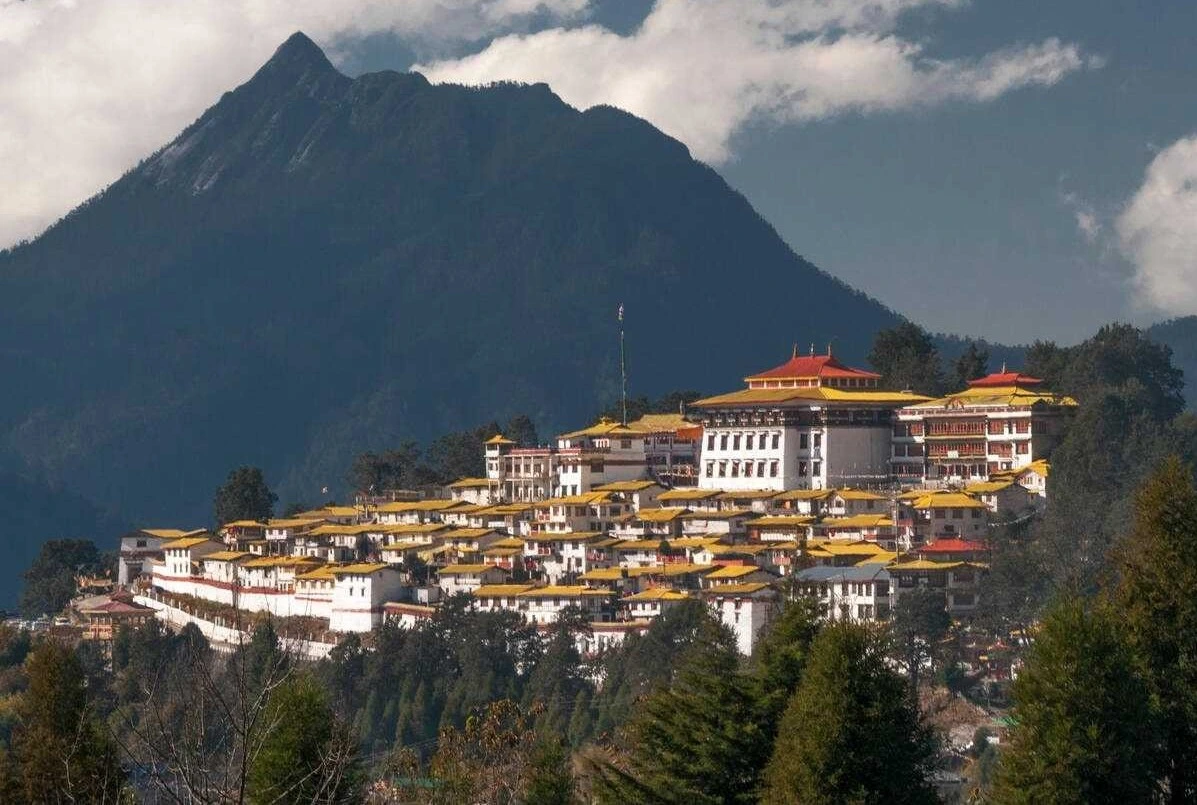
✅ If your Northeast plans stay in Meghalaya, Assam, and Tripura, your India visa is genuinely the whole story. Book this the way you'd book any other unrestricted India destination, no separate permit conversation needed, and no group minimum to plan around.
✅ If Sikkim's high-altitude routes are on your list, plan for a Restricted Area Permit arranged through your local operator, in addition to your standard visa, and expect this to be handled as part of the tour package rather than something you file for separately. Gangtok and the main circuit need nothing extra; Nathu La, Tsomgo Lake, and North Sikkim do.
✅ If Arunachal Pradesh, Nagaland, Manipur, or Mizoram are involved, budget real lead time, a registered agent, and a group booking into your plans from the outset. This is not a region to finalize two weeks before departure, particularly now that three of these four states have gone from permit-free back to requiring the full Protected Area Permit process. Treat the permit timeline, not your flight dates, as the thing that actually determines how far in advance you need to start planning.
Start With What Every Version of This Trip Actually Needs
Whichever combination of these states ends up on your route, from a single, permit-free stretch through Assam and Meghalaya to a full circuit touching Sikkim's restricted north and Arunachal Pradesh beyond it, every version of this trip rests on the same foundation: a correctly approved India visa, applied for with enough runway that it's confirmed well before you're arranging anything else.
At IVC Visas, we check your application, category, and documents before submission, on both standard and express service, so that foundation holds regardless of how far into the Northeast your itinerary eventually reaches.
Talk to our team directly if any part of your Northeast route, particularly the states that changed rules in late 2024, needs a second look before you commit to a booking.
Start your application with IVC Visas today!
Disclaimer: IVC Visas is an independent visa service provider. We assist with application preparation and submission to official government portals for India e-Visa applications. Protected Area Permits and Restricted Area Permits for Sikkim, Arunachal Pradesh, Nagaland, Manipur, and Mizoram are handled separately through registered travel agents, the relevant state authorities, or the eFRRO system, and are outside the scope of what IVC Visas processes. Final visa approval decisions are made solely by Indian immigration authorities. All information is based on current regulations as prescribed by the Government of India, which may change. Always verify the latest requirements before travel.