No patient should have to navigate hospital admission, an unfamiliar country, and a language they may not speak entirely alone. India's e-Medical Attendant Visa exists specifically to allow a family member or caregiver to travel alongside a patient receiving treatment, and while it runs on the same basic framework as the patient's own medical visa, it has requirements and restrictions that are distinctly its own.
This guide covers exactly who qualifies as an attendant, what documents are needed, how the relationship requirement actually works in practice (including for those who aren't blood relatives), and everything else worth knowing before you apply.
What the India e-Medical Attendant Visa Actually Is?
The India e-Medical Attendant Visa is issued to a foreign national from eligible nationalities like Sweden, Niger Republic, Saudi Arabia and many more, accompanying a patient who holds a valid India e-Medical Visa. It is not a standalone visa category that can be applied for independently. Every attendant application is tied directly to a specific patient's medical visa, and it cannot exist without one.
The attendant visa is described as 'coterminous' with the patient's medical visa, meaning both visas run on identical timelines. When the patient's e-Medical Visa expires, the attendant's visa expires with it, regardless of when the attendant actually entered India or how long they've been in the country.
✅ Validity and entries: The e-Medical Attendant Visa carries the same 60-day validity from first arrival as the patient's e-Medical Visa, with triple entry permitted within that window. This allows an attendant to exit and re-enter India up to three times during the visa's validity, useful if travel between India and their home country is needed partway through the patient's treatment.
✅ How many attendants can accompany one patient: A maximum of two attendants may be granted per patient. If more than two family members wish to travel, additional companions beyond the first two would need to apply for a standard e-Tourist Visa instead, since they wouldn't fall under the attendant category.
Who Actually Qualifies as an Attendant?
This is the part of the process that generates the most confusion, and it deserves a clear, direct answer.
Official guidance from multiple Indian missions consistently states that the Medical Attendant Visa may be granted to the spouse or children of the patient, or to those who have blood relations with the patient. On paper, this reads like a strict, closed list, restricted to immediate family.
In practice, the process does allow for a broader range of caregivers, including nurses, close friends, or hired caregivers, but the pathway for a non blood relative differs from the pathway for a spouse or blood relation.
If the attendant is a spouse, child, or blood relative:
Standard documentation applies. Proof of the relationship, such as a marriage certificate or birth certificate establishing the family connection, is submitted alongside the visa application.
If the attendant is not a blood relative (a friend, a hired caregiver, a nurse, or anyone outside the immediate family):
An additional document is required. According to guidance from Indian missions handling this category, in cases where the hospital has not itself prescribed the need for a medical attendant, or where the attendant is providing moral or emotional support rather than a medically necessary function, an undertaking from the patient is required. This undertaking must give the personal particulars of the attendant and explain the specific need for that person to accompany them.
In effect, this means a friend or hired caregiver can accompany a patient to India, but the patient needs to formally state, in writing, who this person is and why their presence is needed. This is not usually a complicated document, but it is a required one, and its absence is a common reason attendant applications for non family caregivers stall.
Documents Required for the e-Medical Attendant Visa
✅ Standard documents required from every attendant, regardless of relationship to the patient:
- Valid ordinary passport with at least 6 months validity from the intended India arrival date, and at least 2 blank pages
- Scanned passport bio page, PDF format, all details clearly legible
- Recent passport photograph, JPEG format, plain white background, no glasses, taken within the last 6 months
- Valid email address for delivery of the approved ETA
- Proof of a return or onward travel ticket
✅ Additional documents depending on the attendant's relationship to the patient:
- For a spouse or blood relative: proof of relationship, such as a marriage certificate, birth certificate, or other official document establishing the family connection
- For a non blood relative (friend, hired caregiver, or nurse): an undertaking from the patient specifying the attendant's personal details and explaining the reason their presence is required, particularly where the hospital has not itself specified a medical need for an attendant
✅ Additional documents that may be requested depending on the complexity of the case:
- Proof of financial capacity to cover the attendant's stay in India
- Address proof
- In certain cases, copies of the attendant's own relevant medical or professional credentials, particularly where the attendant is a trained nurse or medical professional accompanying the patient in that capacity
One document that is not the attendant's responsibility to generate: Confirmation that the patient's hospital has been properly registered on India's Medical and Ayush Visa Portal, and that the patient's own invitation letter has been correctly issued through that system. This is entirely the patient's application requirement, but since the attendant visa cannot exist without a valid patient e-Medical Visa in place, delays on the patient's side inevitably delay the attendant's application too. If you're the one applying as the attendant, it's worth confirming directly with the patient, or the treating hospital, that this step has already been completed before you begin your own application.
Applying for the e-Medical Attendant Visa, Step by Step
Step 1: Confirm the patient's e-Medical Visa application is underway or already approved.
Since the attendant visa is entirely dependent on the patient's visa, there's little value in starting the attendant application before the patient's own hospital documentation and visa application are confirmed.
Step 2: Determine which documentation pathway applies to you.
If you are the patient's spouse, child, or blood relative, gather standard relationship proof. If you are a friend, hired caregiver, or nurse without a blood relationship to the patient, prepare the patient's written undertaking specifying your details and the reason for your accompaniment.
Step 3: Complete the e-Medical Attendant Visa application through the official Indian government portal or through IVC Visas, entering your own passport and personal details, and referencing the patient's e-Medical Visa application.
Step 4: Upload your documents, including your passport scan, photograph, relationship proof or undertaking, and any additional supporting documents relevant to your situation.
Step 5: Pay the applicable fee. The e-Medical Attendant Visa fee varies by nationality under India's reciprocal pricing model, with a 3% bank transaction charge applied additionally on card payments (4% for PayPal).
Check the current fee for your nationality before applying. You may check with IVC Visas or from the official India visa online portal. If you apply through a service provider like IVC Visas, you are also required to pay an additional amount for the service charge.
Step 6: Receive your ETA by email once approved, and confirm your status reads GRANTED on the official portal before travelling.
IVC handles India e-medical visas and India e-medical attendant visas effortlessly for the applicants.
If you need any kind of assistance or early submission of application, reach out to IVC Visas as they also provide rush service, prioritizing your India visa application first.
Yellow Fever Vaccination and Other Entry Conditions Attendants Must Meet
The e-Medical Attendant Visa carries all the same entry conditions applied to standard e-Visa holders, and these apply to the attendant just as much as they apply to the patient.
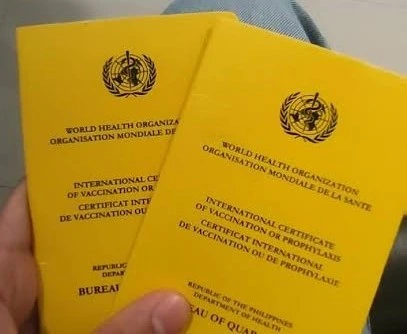
If you have visited or departed from a Yellow Fever endemic country in the six days before arriving in India, you are required to carry a valid Yellow Fever vaccination certificate from an authorised vaccination centre. This applies regardless of your role as a caregiver rather than a patient.
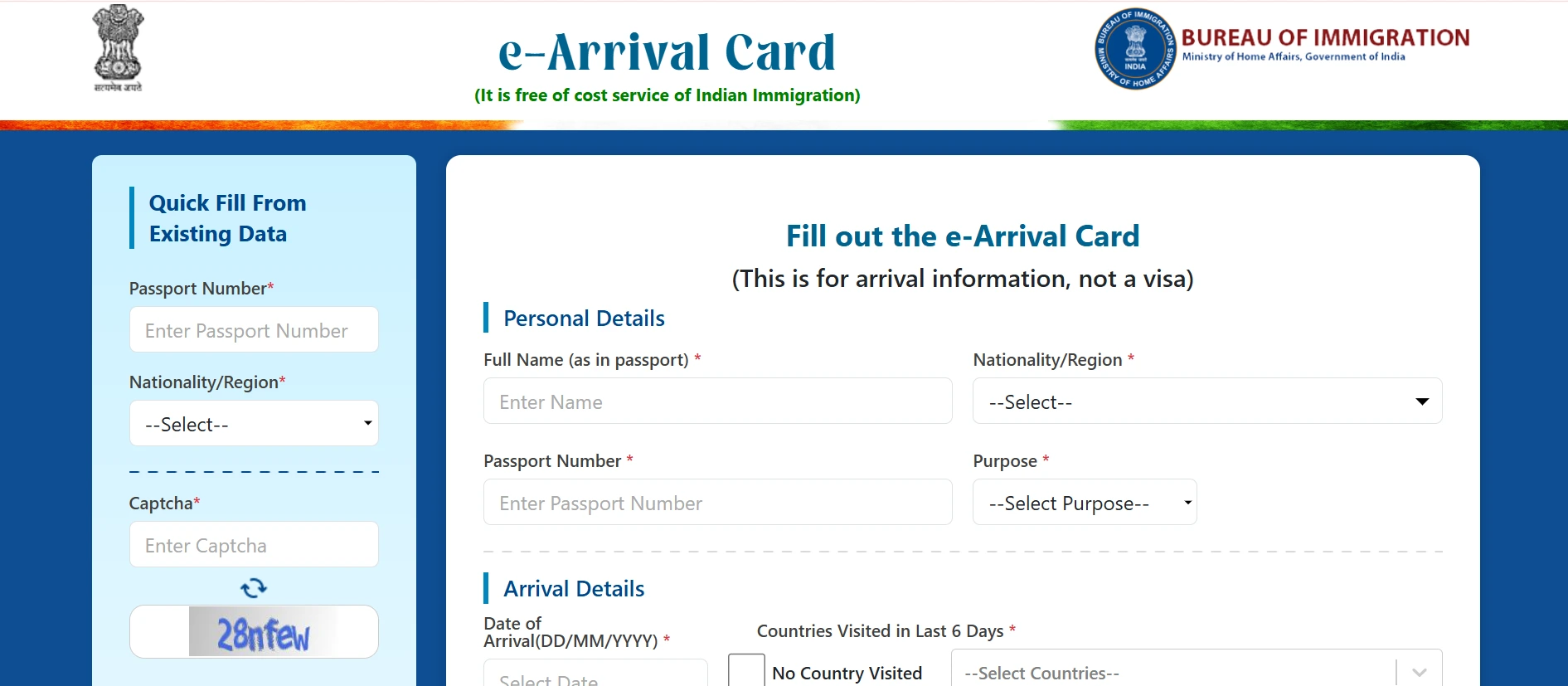
The mandatory e-Arrival Card, introduced in April 2026, must also be completed by every attendant individually within 72 hours before arrival, via the official portal or the Indian Visa Su-Swagatam app. This is a separate requirement from the visa itself, and each traveller, patient and attendant alike, must complete their own.'
Biometrics, including fingerprints and a photograph, are captured for attendants on arrival at Indian immigration, exactly as they are for the patient and for any other foreign national entering India.
What Happens If the Patient's Treatment Extends Beyond 60 Days
Since the attendant's visa is co terminus with the patient's visa, if the patient's treatment genuinely requires more time than the initial 60 day window allows, both visas would need to be addressed together, not separately. If the patient applies for an extension through the FRRO system due to a documented medical necessity, and that extension is approved, the attendant's stay would need to be considered alongside it, generally requiring the attendant to demonstrate the continued need for their presence as part of that same extension request.
An attendant cannot independently extend their own visa if the patient's underlying medical visa is not itself extended, since the attendant visa has no standing separate from the patient's.
📌 A Practical Note on Multiple Attendants Over the Course of Treatment
For longer or more complex treatments, some families choose to rotate which family member is physically present in India, rather than having the same two attendants remain for the entire duration. This is generally workable within the visa system, since each attendant applies and travels individually, but it's worth planning around the triple entry limit on each attendant's own visa and the 60 day co terminus window overall, rather than assuming unlimited flexibility to swap caregivers in and out.
📌 Supporting a Patient Shouldn't Come With Its Own Set of Obstacles
Being the person who travels with a loved one for treatment in another country carries its own weight, often on top of the emotional burden the illness itself already brings. The last thing that role needs is a visa process that adds confusion about which documents apply, whether a friendship qualifies where blood relation is assumed, or how a fee schedule interacts with a patient's own application timeline.
At IVC Visas, we handle patient and attendant applications together, checking that both are aligned from the outset rather than discovering a mismatch after submission. If you're a caregiver who isn't a blood relative of the patient, we'll help you prepare the correct undertaking documentation from the start, rather than leaving you to discover the requirement after a delay. And if the patient's treatment date is approaching quickly, our express service keeps both applications moving together rather than letting one lag behind the other.
You're already carrying enough. Start the attendant visa application alongside the patient's, or speak with our team first if you want to confirm exactly which documents apply to your specific situation before you begin.
▸ Start with IVC VISAS today to make your medical journey in India stress-free!
Disclaimer: IVC Visas is an independent visa service provider. We assist with application preparation and submission to official government portals. Final visa approval decisions are made solely by Indian immigration authorities. All information is based on current regulations as prescribed by the Government of India, which may change. Always verify the latest requirements before travel.