Before you start your India e-Visa application, you want to know one thing: what is an India e-Visa going to cost?
The answer isn't a single number. Actually, it's a structure. India's e-Visa fee varies by nationality and by visa category. Once you understand how the pricing model works, working out your own fee takes under a minute. This guide explains every component clearly, confirms what the official portal states, and tells you where to verify your exact figure before committing to a non-refundable payment.

How India's e-Visa Fee Structure Works?
India's e-Visa fee is determined by the visa category, duration of stay, nationality and time of application. This means the India visa fee charged to a French passport holder is different from the fee charged to a US passport holder, which is different again from the fee charged to a South African or Japanese applicant.
India aligns its visa charges through "bilateral arrangements" and offers "gratis" (free) visas to specific cooperative nations. It is the consistent principle underpinning the India visa fee table. For instance, nations that maintain complete visa-free or low-cost access agreements for Indian passport holders (such as Mauritius, Jamaica, and the Maldives) are intentionally categorised as "Gratis" ($0 fee) on the official India visa fee table.
The practical implication: you cannot determine your Indian visa fee from another nationality's experience. A friend who paid one amount for their India e-Visa may have paid a completely different figure than you will.
Fee varies by India e-Visa Category
Your fee also depends on which India e-Visa category you apply for. The official portal maintains two separate fee schedules:
- India e-Tourist Visa fee schedule covering the 30-day, 1-year, and 5-year e-Tourist Visa
- Other e-Visa fee schedule covering e-Business, e-Medical, e-Medical Attendant, e-Student, e-Family, e-Transit, e-Miscellaneous, and e-Production Investment Visa
These are published as downloadable PDFs on the official Indian e-Visa portal. You'll need to confirm the current India e-visa fee structure for all eligible nationalities and categories before you begin your application.
The general pattern across categories is that the 30-day e-Tourist Visa carries a lower fee than the 1-year and 5-year variants. The 5-year e-Tourist Visa typically carries the highest fee in the tourist category. Business and medical visa fees follow their own schedule and may differ significantly from tourist fees for the same nationality.
Note: The 30-day India e-Tourist Visa is the only category with a season-based fee structure. The official fee schedule lists two separate columns for it:
- April to June: lower fee rate
- July to March: higher fee rate
For most nationalities, the 30-day e-Tourist Visa costs USD $10 from April to June and USD $25 from July to March. This means a traveler applying in May pays a lower government fee than an identical applicant applying in August, for exactly the same visa. The 1-year and 5-year e-Tourist Visas carry a flat fee regardless of when you apply.
This seasonal variation is officially documented on the Indian government's e-Tourist Visa fee schedule and is worth factoring into your planning if flexibility on timing is possible.
Fee varies by Different Nationalities
Since the fee is also nationality-specific, here are some recently confirmed figures of countries that have exceptionally high or low amounts of India e-visa fees (sourced from the official Indian government fee tables):
📌 UK nationals pay significantly more for longer-duration tourist visas.
The 5-year e-Tourist Visa costs $484 for UK passport holders versus $200 for most other nationalities — reflecting the reciprocal arrangement between India and the UK on long-term visa pricing. The same premium applies to Gibraltar, Guernsey, Jersey, and the Isle of Man.
📌 UAE nationals pay the highest e-Business Visa fee.
At $415, the UAE e-Business Visa fee is the highest on the official schedule, significantly above the USA ($140) and Australia ($215). The e-Tourist Visa fee for UAE nationals is standard, making category selection particularly consequential for Emirati business travelers.
📌 Japan pays a flat $25 across all e-Tourist Visa durations.
Unlike every other nationality where the 1-year and 5-year tourist visas cost more than the 30-day option, Japanese nationals pay $25 regardless of which tourist visa duration they choose, and $25 across most other categories too.
📌 A meaningful number of nationalities pay no Indian government fee across all India e-Visa categories; the fee is listed as $00 on the official schedule. This is not a discount or a waiver; it reflects India's bilateral arrangements with these countries, where visa fees are mutually waived or set to zero by agreement.
Nationalities confirmed at $00 across all e-Tourist Visa durations include: Argentina, Cook Islands, Indonesia, Jamaica, Kiribati, Marshall Islands, Mauritius, Micronesia, Mongolia, Myanmar, Nauru, Niue Island, Palau, Papua New Guinea, Samoa, Seychelles, Solomon Islands, South Africa, Tonga, Tuvalu, Uruguay, and Vanuatu.
For these nationalities, the Indian government e-Visa fee is zero. The 3% bank transaction charge on a zero-dollar fee also amounts to zero. The only cost these applicants incur is the IVC Visas service fee, if applying through an assistance provider.
Important: A zero government fee does not mean the visa process is any less thorough. Applications from gratis-fee nationalities go through the same review process, the same photo and document checks, and the same approval or rejection determination as any other applicant. The fee exemption has no bearing on the outcome.
The Bank Transaction Charge On Top of Every Fee
This is the component most applicants miss until they're at the payment screen.
Bank transaction charges of 3% will be charged additionally on applicable India e-Visa fees. The charge depends on which payment method you choose to process payment.
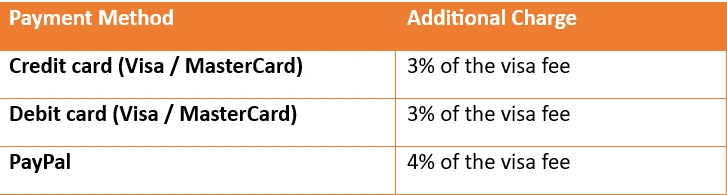
This charge is levied by the payment processor (SBI ePay or Axis Bank) and is separate from the visa processing fee. It is not negotiable, not waivable, and applies to every successful transaction. The breakdown is displayed on the payment page before you confirm, so you will see the full amount before committing.
There is no way to avoid this charge. It applies regardless of which payment method you choose, with PayPal carrying a slightly higher rate.
What the India Fee Does Not Cover
Three common misunderstandings worth clearing:
🚫 No emergency or express fee exists.
The Government of India makes no provision for charging any emergency fees or additional fees for grant of any emergency or express e-Visa. If any website or individual offers you faster processing in exchange for an additional payment, they are not operating through official channels. The processing timeline is the same for every applicant; the fee cannot buy speed.
However, if you want to process your India e-visa application as soon as possible, you can apply through IVC Visas, an independent service provider. IVC provides normal as well as express service, based on what the applicant demands.
🚫 No payment at Immigration
No payment is required at the airport. The required processing fee for India e-visa has already been paid online. Applicants are advised to be cautious of anyone at the airport demanding additional payment for India e-Visa related services.
🚫 Service fees from assistance providers are separate.
If you apply through IVC Visas, our service fee, which covers the pre-submission review, document check, and support, is separate from and in addition to the government's India e-Visa processing fee. Both are clearly displayed before you pay. The government fee goes to the Indian government while the service fee is charged by IVC Visas for the assistance provided.
The Non-Refundable Rule
The India e-Visa processing fee, once submitted, is non-refundable as the fee is for processing of the application and is not dependent on either Grant or Rejection of the Electronic Travel Authorization.
This applies in every given scenario:
- Application rejected
- Application granted but travel cancelled
- Wrong visa category applied
- Processing takes longer than expected
What happens if you need to reapply after rejection?
A rejected application requires a completely new application and a completely new fee payment. There is no fee credit, transfer mechanism, or offset from a previously rejected application. Each submission is treated independently, which means two rejections cost two full fees. For applicants from nationalities where the e-Business Visa fee alone is $140, $200, or $415, a repeated rejection represents a significant financial consequence. The pre-submission review IVC Visas provides exists specifically to prevent this scenario.
The only exception is a technical payment failure where money was deducted but no successful transaction was registered — in that case, a refund is initiated through the payment processor's reconciliation process within 7 days.
This is precisely why understanding the India e-visa fee before committing matters, and why a pre-submission review to avoid rejection is a meaningful financial protection. IVC Visas provides a list of mistakes that could lead to rejection of the India e-visa.
Learn to avoid such mistakes before submitting your India e-visa application.
Do Children Pay the Same India e-Visa Fee?
Yes. There is no age-based fee reduction or child discount on the India e-Visa. Every traveler — regardless of age, including infants and children — requires their own individual India e-Visa at the full applicable fee for their nationality and visa category. A family of four each pays the full per-person fee. There is no family visa category, no group discount, and no reduced rate for minors.
How to Find Your Exact Fee Before Applying
Option 1 - Check with IVC Visas before starting your application. Current fees for all eligible nationalities and visa categories are listed. The service charge and government fees are displayed before you pay, and you submit the application to IVC Visas with details and documents.
Option 2 - Check on the official India visa portal by starting an application, selecting your nationality and visa category, and proceeding to the payment step. The exact fee, including the bank transaction charge, is displayed before you confirm payment.
Do not rely on forum posts, review sites, or blog articles (including this one) for exact fee figures. Fees are updated periodically and the only source that reflects the current amount is the official fee schedule or the payment page itself.
Still, IVC can update you with the current fee variations.
India Visa Fee-Related Mistakes to Avoid
- Paying without checking your specific fee first. Fees vary significantly by nationality and visa category; assume nothing before confirming through official India visa portal.
- Forgetting the 3% bank transaction charge, it is additional, not included in the listed visa fee.
- Using PayPal expecting the same charge as a card. PayPal carries 4%, not 3%.
- Applying under the wrong category. Each category has its own fee; a rejected wrong-category application loses the full fee with no refund.
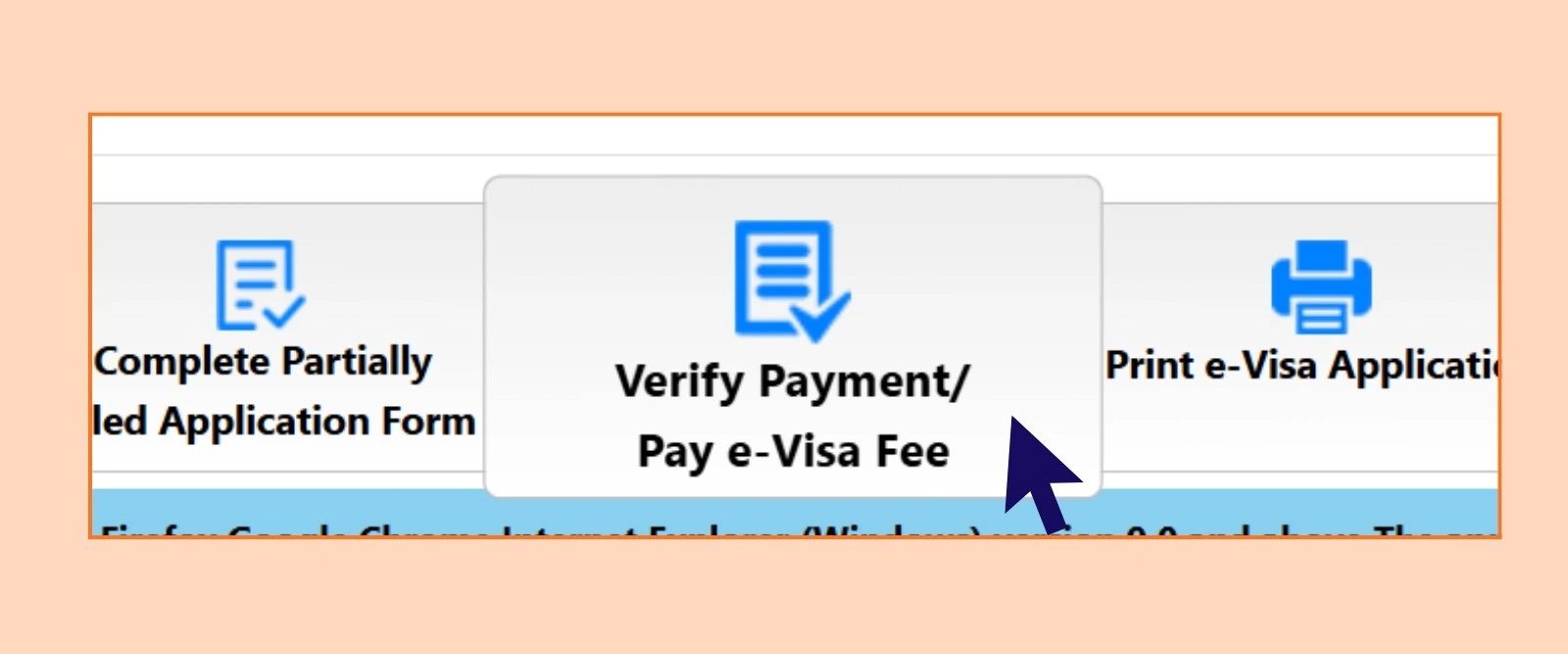
- Paying twice due to a failed transaction. Use the 'Verify Payment' tab on the portal before retrying to confirm whether the first payment registered
Applying through IVC Visas means your application, photo, and documents are reviewed before submission, reducing the risk of a rejection that costs you a non-refundable fee. Check current pricing for your nationality and visa category before you begin.
Questions before applying? Contact our team or start your application directly with IVC Visas.
Disclaimer: IVC Visas is an independent visa service provider. We assist with application preparation and submission to official government portals. Final visa approval decisions are made solely by Indian immigration authorities. All information is based on current regulations as prescribed by the Government of India, which may change. Always verify the latest requirements before travel.