
Getting a rejection on your India e-Visa application stings — especially when your travel plans are already in motion. The instinct is to reapply immediately. That instinct is also the fastest way to get rejected twice.
Here's what actually happens after an India e-Visa rejection, what you can do about it, and when reapplying online isn't even the right move.
First - Make Sure It's Actually a Rejection
What an India e-Visa Rejection Actually Looks Like
Most applicants expect a rejection to come with an explanation. It doesn't.
When the Ministry of Home Affairs rejects an India e-Visa application, the notification arrives as a brief status update, either through the official portal showing 'Rejected', or via a short email to the address provided during application. The email typically reads something close to:
"Your application for Indian e-Visa has been refused. The fee paid is non-refundable."
There is no reason given. No specific field flagged. No indication of whether the issue was technical, documentary, or eligibility-based.
This isn't an administrative oversight, it's deliberate policy. Under Indian immigration law, including the recently enacted Immigration and Foreigners Act 2025, the government is not obligated to disclose the reason for refusing an India e-Visa. Visa decisions are considered sovereign acts, and disclosing specific rejection criteria could theoretically allow applicants to game the system. The practical consequence for the applicant is that diagnosing the problem falls entirely on you — or on someone reviewing your application with experience of what the portal flags.
One important distinction to make before acting on anything: a payment failure is not a rejection. If your payment didn't process correctly, your application simply wasn't submitted. Check your bank statement and the portal status carefully. If the payment went through and the status reads 'Rejected', you have a genuine rejection. If payment failed and the application was never submitted, you can reapply immediately with no additional concern.
Before doing anything, confirm your application status on the official Indian e-Visa portal.
'Under Review' or 'Under Process' is not a rejection. It means your India e-Visa application is still being assessed. Taking action — including submitting a new application — while your original is still under review can create complications and trigger duplicate application flags on your passport number. Only proceed once your status explicitly reads 'Rejected'.
No Mandatory Waiting Period, But Don't Reapply Blindly
There is no official waiting period to reapply for an India e-Visa after a rejection. You can technically submit a new application the same day. However, submitting identical details with the same errors produces the same outcome — another rejection, another non-refundable fee, and less time before your travel date.
The only real prerequisite before reapplying is identifying and fixing what went wrong. Since the Indian government is not obligated to tell you why your India e-Visa was rejected — and most rejection emails won't — that diagnosis falls entirely on you.
IVC Visas helps nationals of Belgium, Australia, Malaysia, New Zealand and other 175 eligible countries to reapply without any identical mistakes. You can also get your Indian e-visa without such common visa mistakes with your first application. Just learn through IVC Visas!
What Happens If You Reapply Without Fixing Anything?
This is worth understanding specifically, not just as a general warning.
The India e-Visa portal links applications to your passport number. When a new application is submitted on a passport that has a rejection on record, the system flags it, not necessarily to reject it automatically, but to route it for closer manual scrutiny. A clean, corrected reapplication on a previously rejected passport can absolutely be approved. An identical reapplication, with the same errors, on the same passport number, is highly likely to be rejected again for the same reason, and now you've paid the non-refundable fee twice.
Submitting a second application while the first is still showing as 'Under Process' or 'Under Review' creates a different problem: a duplicate application flag. Indian immigration systems register multiple simultaneous applications on the same passport as an anomaly. This can stall both applications, or cause the newer one to be rejected for the duplication itself rather than any issue with its content.
Wait for a definitive status — 'Granted' or 'Rejected', before submitting anything new.
What to Audit Before Reapplying?
Work through each of these before submitting a new India e-Visa application. Most rejections trace back to one of the following:
❎ Name mismatch
Every character in your name must match your passport exactly, including middle names, spacing between words, and hyphenation. If your passport shows "MARIA-JOSE FERNANDEZ GARCIA", every element of that string needs to appear identically on the form. A name that appears consistent to you visually can still contain a character difference that the system catches. Check the MRZ line at the bottom of your passport bio page, that machine-readable strip shows your name in the exact format the system cross-references. This is the single most common mistake on India e-Visa applications.
❎ Non-compliant photograph
JPEG format, 10 KB–1 MB, plain white background (not off-white, not cream), no glasses, taken within 6 months, file name in plain alphabets only. The upload check doesn't catch visual issues but a reviewer does. Over 80% of technical rejections involve document or photo file issues, including incorrect file size, blurry images, or the MRZ line on the passport scan being partially cropped. Review the full photo and document requirements before uploading again.
❎ Passport validity
Your passport must be valid for at least 6 months from your intended India arrival date, with 2 blank pages. A passport expiring within that window will be rejected regardless of everything else being correct.
❎ Damaged or poor-condition passport
A physically damaged passport, missing pages, detaching cover, heavy staining, or visible tampering can be grounds for rejection even if all details are legible. If your passport is in poor physical condition, renewing it before reapplying is the correct step, not simply resubmitting with the same document.
❎ Lost old passport
If your current passport was issued as a replacement for a lost or stolen one, include a police report confirming the loss when applying. The absence of this documentation creates a gap in your travel document history that manual reviewers are trained to flag.
❎ Wrong India e-Visa category
An e-Tourist Visa application that contains business-related supporting documents, or an e-Business Visa application that declares a tourist purpose, will not pass review. Confirm your category matches your actual travel purpose precisely, against the eligibility criteria.
❎ Blurry or low-contrast passport bio page scan
A scan that passed the upload check can still fail manual review if a reviewer can't clearly read your details. Rescan in full color, high contrast, all four corners visible, MRZ line fully in frame, PDF format, 10 KB–300 KB.
❎ Pakistani lineage or connection
This is broader than most applicants realize. If you, either of your parents, either of your grandparents (paternal or maternal), or your spouse were born in or were permanently resident in Pakistan, you are not eligible for an India e-Visa — regardless of your current citizenship. The e-Visa system runs automated checks against declared nationality history. If this applies, apply through the Indian Embassy or High Commission in your country via regular visa channels.
❎ Undeclared background information
If you have a defence, military, police, or security background and didn't declare it or if you have any criminal convictions and left those fields blank, that is a more serious rejection cause than a photo error. The India e-Visa is explicitly not available to people with certain background profiles, and the India e-Visa application form requires honest answers to these fields. Apply through your nearest Indian Embassy or High Commission via the regular visa route instead.
❎ Payment failure mistaken for rejection
Check your bank statement before concluding you were rejected. A failed payment means the application was never submitted — the portal may still show an incomplete or pending status rather than 'Rejected'. If payment genuinely failed, reapply and attempt payment again. If payment went through and status reads 'Rejected', it is a genuine rejection and the fee is non-refundable.
One Field You Must Answer Honestly in Every New Application
The India e-Visa application form asks whether you have previously been refused a visa for India. This is a mandatory field.
Declare the previous rejection truthfully. One honest declaration does not automatically disqualify you. Suppressing it, however, is grounds for a more serious refusal and puts future India visa applications at risk.
Does an India e-Visa Rejection Affect Future Applications?
This is one of the most searched questions after a rejection and the honest answer has two parts.
➤ One rejection, corrected and reapplied: Does not automatically affect future India e-Visa applications. Thousands of applicants are rejected for technical reasons, a photo error, a name mismatch; and approved on a clean reapplication. A single technical rejection on your record, honestly declared in the "previous refusal" field of your new application, does not trigger automatic re-rejection.
➤ Two or more rejections: Repeated rejections create a more complex picture. Under the Immigration and Foreigners Act 2025, India's immigration systems now maintain a more integrated, centralized record of foreign nationals' application histories. Two rejections on the same passport number, particularly if the second application appeared identical to the first, suggest either an unresolved eligibility issue or a systemic problem that the e-Visa portal isn't suited to resolve. At this point, the e-Visa route is not the right one — the embassy route is.
➤ What the "previous refusal" declaration field means in practice: The India e-Visa application form asks whether you have previously been refused a visa for India or any other country. Declare truthfully. One honest declaration of a prior India e-Visa rejection does not disqualify you. Suppressing it particularly when the government's centralized system can cross-reference your passport history, is now a more detectable omission than it was before the 2025 Act came into force, and suppression is itself grounds for a more serious refusal.
➤ Travel history and overall profile: Beyond the declaration field, the system and its reviewers consider your overall travel profile. A passport with multiple visa refusals from various countries, or a travel history that doesn't align with the stated purpose of the India visit, adds background scrutiny that a clean application doesn't carry. This isn't unique to India — most immigration systems operate this way — but it's worth being aware of when planning a reapplication.
When Reapplying for an India e-Visa Online Isn't the Right Move
Two situations where another India e-Visa application is not the answer:
🚫 You've been rejected twice or more.
Repeated rejections suggest an eligibility issue, not a correctable form error. At this point, apply for a regular India visa through the Embassy of India or High Commission in your country. A consular officer can assess your application with more context than the online system allows.
🚫 What the embassy route looks like compared to e-Visa:
The regular visa application process involves submitting physical documents — or digital documents through a visa application centre — directly to an Indian Mission, which then has a consular officer review your case with considerably more discretion than the automated e-Visa system allows. You can include a cover letter explaining your situation, provide additional context for your travel purpose, and in some cases, address a prior rejection directly with supporting evidence. Processing times vary by embassy and visa type, typically running 5–15 working days depending on the mission's workload and your nationality.
Find your nearest Indian Embassy or High Commission before starting a regular visa application. The document requirements for the regular route differ from the India e-Visa checklist, confirm the specific list with the embassy directly, as requirements vary by nationality and visa category.
🚫 Your travel date is within 5–7 days.
Real-world India e-Visa processing currently averages 8–10 business days. Reapplying online at this stage is impractical. Contact your local Indian Mission directly, urgent travel cases, particularly medical and business, are sometimes handled on an expedited basis through the embassy route.
If your travel is within this window:
Contact your local Indian Mission directly. Some embassies and high commissions handle urgent cases, particularly medical emergencies and critical business travel on an expedited basis through walk-in or appointment-based routes. This is not guaranteed, and not all missions have the capacity for it, but it is the only realistic option when the India e-Visa timeline has been missed entirely.
If the trip genuinely cannot be rescheduled and the embassy urgent route isn't available, the honest answer is that the trip may need to be postponed. A rejected India e-Visa with travel in 3 days has no reliable fix through the online system.
The Rejection Was Avoidable | Here's How to Make Sure the Next Application Isn't
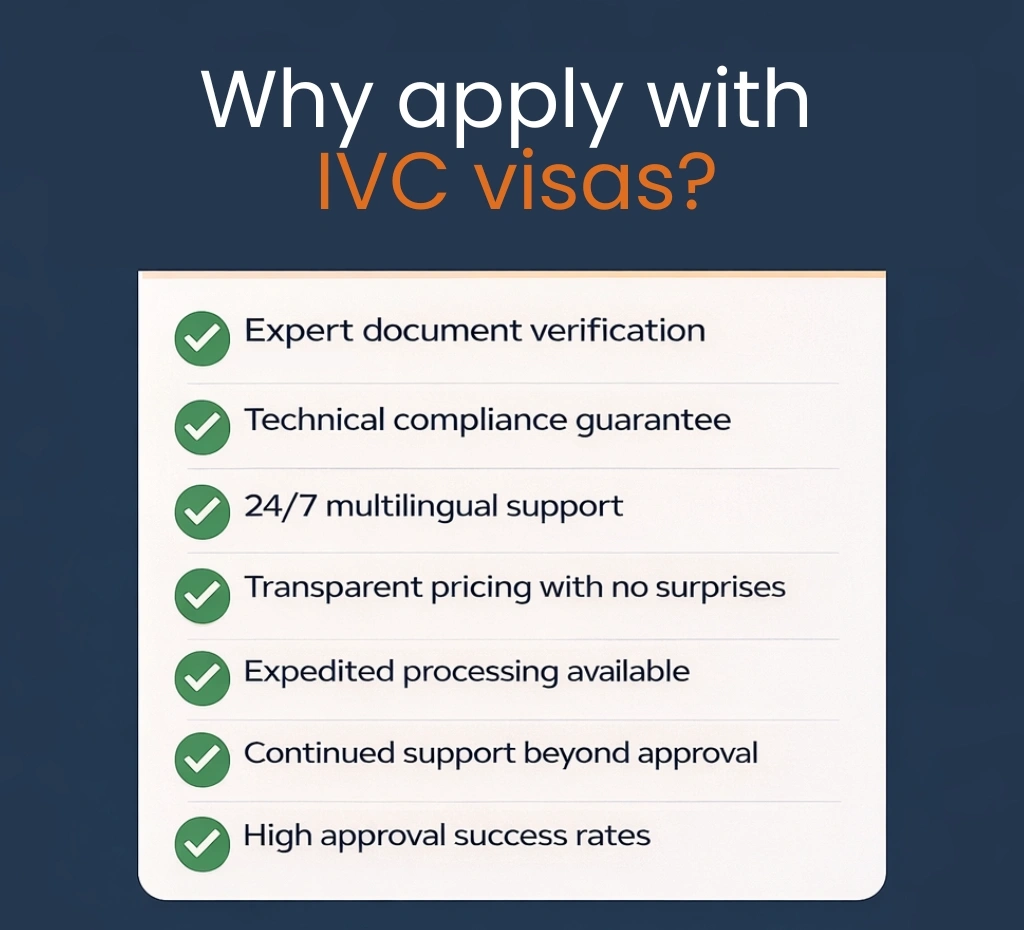
Most India e-Visa rejections come down to errors that a thorough pre-submission review would have caught. At IVC Visas, we check photo compliance, document quality, name accuracy, category selection, and file formatting before your application reaches the portal. If you've already been rejected once, a reviewed second application is meaningfully safer than an unreviewed one.
The India e-Visa fee is non-refundable. A review before submission costs far less than a second rejection.
IVC Visas handle India e-Visa applications for nationals from over 175 countries, reviewing every application before it reaches the portal.
If your India e-Visa has been rejected and you're not sure why, contact our team before reapplying.
We'll help identify the issue and make sure your next submission goes in right!
Disclaimer: IVC Visas is an independent visa service provider. We assist with application preparation and submission to official government portals. Final visa approval decisions are made solely by Indian immigration authorities. All information is based on current regulations as prescribed by the Government of India, which may change. Always verify the latest requirements before travel.