Applying for Your India e-Visa Yourself vs Using IVC. An Honest Cost-Benefit Breakdown!
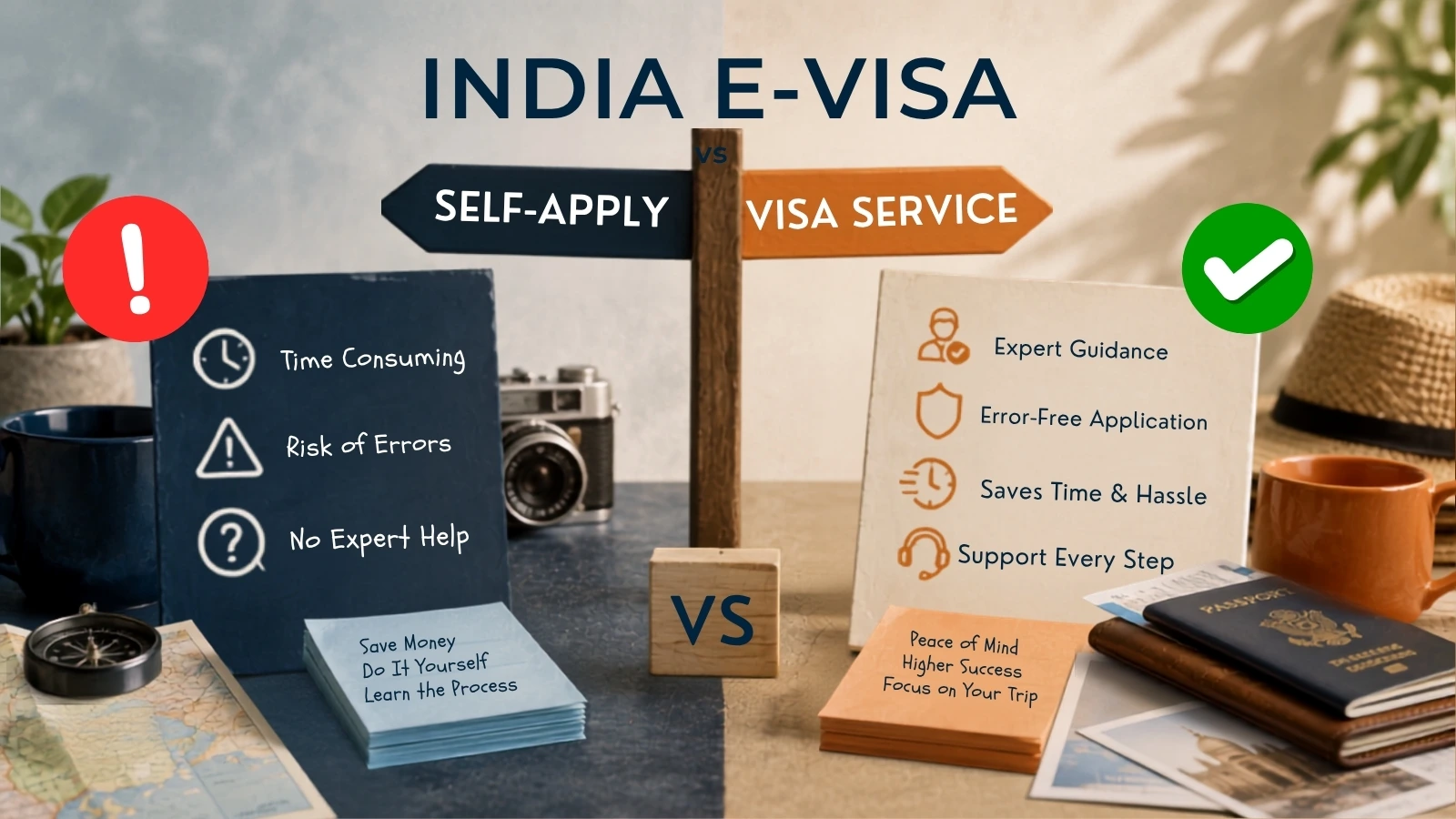
Most India visa service comparisons are written by the service being compared. That creates an obvious problem: the honesty tends to stop exactly where the sales pitch starts.
This is where you require a transparent agent who explains things as they are. IVC is going to tell you exactly when applying for your India e-Visa directly through the official portal is the smarter choice, and exactly when using IVC Visas is worth the additional cost.
The goal here is to give you the information to make that call accurately, not to convince you of a predetermined conclusion.
What "Applying Directly" Actually Involves!
The official Indian e-Visa portal is publicly accessible to any eligible applicant worldwide. There are no login requirements to start, no invitation codes, and no barriers beyond internet access and a payment card. The process is:
- Open the portal, select your visa category, and fill in the application form — nationality, passport details, travel dates, contact information, and a series of background questions.
- Upload your passport bio page scan (PDF, 10 KB–300 KB) and passport photograph (JPEG, 10 KB–1 MB, white background, no glasses).
- Upload any supporting documents required for your category. Business card and invitation letter for e-Business, hospital letter for e-Medical, and so on.
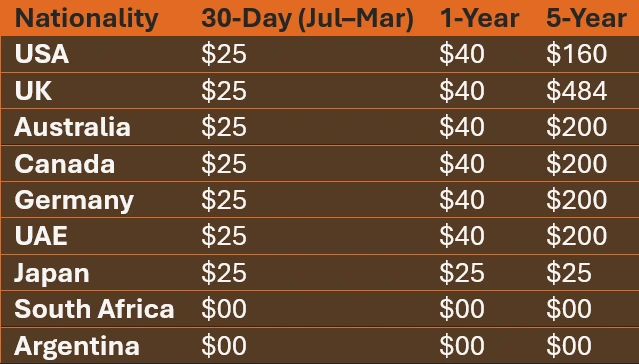
- Pay the applicable government fee. The fee varies by nationality and category, from $00 for certain nationalities (Argentina, South Africa) to $484 for UK nationals applying for a 5-year e-Tourist Visa. A 3% bank transaction charge applies on top.
- Receive your Electronic Travel Authorization (ETA) by email once approved.
That is the direct process. There are no hidden steps, no requirement to use any intermediary, and the Indian government explicitly states that no facilitation is required. The portal works for most applicants, most of the time.
🚨Exception: If you own a diplomatic, official, service or special passport, or have a military background or of Pakistani lineage, you are not eligible to apply for an India e-visa.
What the Government Fee Actually Costs (By Nationality)
Before comparing doing it yourself and IVC, it is important to know exactly what the government fee is for your nationality. Here are confirmed figures of some of the countries from the official Indian government fee schedule dated December 2025:
India e-Tourist Visa (government fee only):
India e-Business Visa (government fee only):
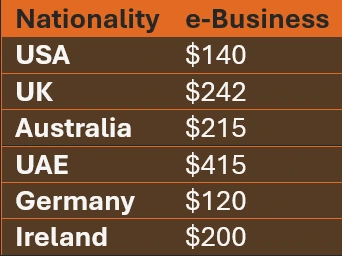
A 3% bank transaction charge applies additionally on all card payments. These are the government fees, not IVC's service fee.
Always, verify before starting India e-visa application at the official portal. IVC breaks down the complete fee structure for India visa applicants.
The Real Costs of Applying Directly; Beyond the Government Fee
The government fee is visible and fixed. The less visible costs of DIY are where the comparison gets more nuanced.
❗Time cost
The India e-Visa form is not complicated, but it is detailed. For a first-time applicant unfamiliar with visa applications, the form — including all background questions, supporting information fields, and document upload steps — takes approximately 30–60 minutes to complete correctly. That includes time to convert your photo to the right format, rename files to plain alphabets, compress your passport scan to under 300 KB, and navigate a portal that has documented browser compatibility issues.
❗The error cost ( and this is the critical one )
The India e-Visa processing fee is non-refundable. The official portal states this without exception:
"The e-Visa processing fee once submitted is non-refundable as the fee is for processing of the application and is not dependent on either Grant or Rejection of the Electronic Travel Authorization."
Every application rejected due to a preventable error — a non-compliant photo, a name mismatch between the form and the passport, a blurry passport scan, a file uploaded in the wrong format, a document in a language other than English — costs the full government fee with no route back. A US citizen who applies for a 1-year e-Tourist Visa and gets rejected for a photo error has lost $40 and must pay $40 again to reapply. A UK national applying for an e-Business Visa and rejected for a document issue has lost $242.
❗The rejection rate on DIY applications
No official rejection rate is published by the Indian government, but IVC Visas' own pre-submission data consistently shows that photo non-compliance (glasses, wrong background, wrong format), name mismatches, and document upload errors account for the overwhelming majority of preventable rejections. These are errors that a review catches before submission and that a first-time applicant frequently misses.
Where 'Doing It Yourself' Makes the Most Sense
Being honest requires saying this clearly: DIY is the right choice in certain situations.
📌 If you are applying for a simple e-Tourist Visa, you are tech-comfortable, you have applied for visas before, and your government fee is low; say, a $25 30-day tourist visa, the risk-adjusted case for paying an additional service fee is thin. If the service fee is close to the government fee itself, the financial protection argument is weak. Apply directly, check the photo specifications carefully, rename your files, and save before submitting.
📌 If you are a frequent India traveler who knows the process well - same conclusion. The learning curve is behind you. The portal is familiar. Doing it yourself is efficient and cost-effective.
📌 If your government fee is zero (Argentina, South Africa, and approximately 20 other nationalities) — there is nothing to financially protect from a rejection. The only cost is time and inconvenience of reapplying. Doing it yourself is a reasonable choice for straightforward applications.
What IVC Visas Actually Adds, And What the Service Fee Buys?
IVC Visas charges a service fee in addition to the government fee. That fee covers specific, tangible things, not vague "assistance."
✔️ Photo compliance review
Before your application reaches the portal, our team checks your photograph against every official specification: format (must be genuine JPEG — not renamed), dimensions (must be square), file size (10 KB–1 MB), background (must be genuinely white, not off-white or cream), face coverage, absence of glasses, absence of shadows, and absence of digital editing. The portal's automated check verifies format and size only, it does not check whether you are wearing glasses or whether the background passes visual inspection. A reviewer does. We catch this before it reaches a reviewer.
✔️ Document compliance review
Passport bio page scan format (PDF only, not JPEG), file size (10 KB–300 KB), legibility (must be clear enough for a human reviewer to read every detail), file naming (plain alphabets only, no numbers, spaces, or special characters), and language (English only for all supporting documents). All of these are checked before submission.
✔️ Form accuracy review
Name spelling against passport, passport number accuracy, date of birth, nationality, and category selection. A single character mismatch between the form and your passport is grounds for rejection. This is checked before submission.
✔️ Category selection guidance
Applying under the wrong India e-Visa category — tourist instead of business, or vice versa — causes rejection without refund. For applicants whose trip combines elements of tourism and business, or who are unsure which of the nine categories applies, guidance before submission prevents an expensive mistake.
✔️ Application submission
For Option A applicants, IVC handles the entire submission — navigating the portal's browser compatibility issues, upload errors, and session timeouts on your behalf.
✔️ Post-submission tracking and support
Once submitted, if a re-upload request arrives from the portal, our team flags it and helps you respond within the 72-hour window. If your ETA doesn't arrive by email, we help you retrieve it. If there is a discrepancy on the approved ETA, we help you contact the helpdesk before your travel date.
✔️ Express service
For applicants with travel dates within two weeks, IVC's express service prioritises preparation and submission on our side, reducing the time between decision-to-apply and application-submitted. The government's processing timeline is the same for all applicants, but every day saved on the submission side matters when a departure is imminent.
The Financial Comparison
The honest financial case for using IVC Visas rests on one simple calculation: is the probability of a rejected application multiplied by the government fee greater than the IVC service fee?
For a UK national applying for an e-Business Visa ($242 government fee), a first-time applicant with no visa experience, the risk-adjusted value of a pre-submission review is significant. One rejection costs $242 which is more than IVC's service fee by a substantial margin. The expected value of a review that meaningfully reduces rejection risk is high.
For a US national applying for a 30-day e-Tourist Visa during April ($10 government fee), the government fee at stake is small. If this is their first application and they are uncertain about document specifications, IVC's review still has value but the financial protection argument is weaker. Here, the value is more about time saved and stress avoided than fee protection.
For nationalities with a $00 government fee, the financial protection argument is absent entirely. IVC still provides time saving, photo review, and post-submission support but there is no non-refundable government fee at risk. The decision becomes purely about whether the service fee is worth the convenience.
⏳ The Time Cost Comparison
A completed IVC Visas application through Option A — where IVC handles everything, typically requires the applicant to spend 10–15 minutes providing their details and uploading their documents. IVC handles the form completion, photo compliance check, document review, and portal submission.
A direct application by a first-time applicant typically takes 45–90 minutes, including photo format conversion, file renaming, document preparation, form completion, and portal navigation. For experienced applicants, this reduces to 20–30 minutes.
Neither number is enormous. But for business travelers, senior citizens, or those applying on behalf of family members including children, the time cost of 'DIY compounds' with the cognitive overhead of unfamiliar technical requirements.
The Honest Summary: Which One Is Right for You?
| Situation | Recommended Route |
| First-time India e-Visa applicant, any category | IVC Visas |
| High government fee ($120+), any category | IVC Visas |
| e-Business, e-Medical, or specialist category | IVC Visas |
| Departure within 2 weeks | IVC Visas (express service) |
| Applying on behalf of a child or elderly relative | IVC Visas |
| Experienced applicant, simple tourist visa, low fee | Doing It Yourself |
| Zero government fee nationality, simple tourist visa | Doing It Yourself or IVC depending on time value |
| Frequent India traveler who knows the process | Doing It Yourself |
The India e-Visa exists to be used directly and for the right applicant in the right situation, direct application is the correct choice. For everyone else, IVC Visas' service fee is a protection against an outcome that costs more than the fee itself.
Confirm your eligibility, and decide which route makes sense for your situation.
If you choose IVC Visas, ➜ start your application here.
If you have questions before deciding, contact our team and we'll give you a straight answer.
Disclaimer: IVC Visas is an independent visa service provider. We assist with application preparation and submission to official government portals. Final visa approval decisions are made solely by Indian immigration authorities. All information is based on current regulations as prescribed by the Government of India, which may change. Always verify the latest requirements before travel.