Long before either country had an embassy in the other's capital, Greek and Indian thinkers were already in conversation. Alexander's campaigns reached the Indus, Hellenistic kingdoms rose in what's now Pakistan and northwest India, and Greek astronomy and Indian mathematics traded ideas for centuries afterward. Modern ties are newer but just as steady, diplomatic relations since 1950, an Indian embassy in Athens since 1978, and a relationship both governments now call strategic.
Today, Greek travelers head to India for the Himalayan foothills, the temples of Tamil Nadu, business in Mumbai, or a yoga course in Rishikesh. Before any of that, though, there's one practical step that has nothing to do with history: a Greek passport holder needs an Indian Visa, and getting the details right the first time saves a lot of headache later.
Do Greek Citizens Need a Visa for India? Yes.

Greece is on India's eligible-nationality list, and there's no visa-free entry and no visa-on-arrival for Greek passport holders. Your e-Visa has to be applied for online and approved before you board your flight to India.
A few exceptions worth knowing about:
❗OCI cardholders (Overseas Citizens of India) are exempt from the visa requirement entirely, regardless of their current nationality.
❗Diplomatic and official passport holders can't use the e-Visa system; they apply through the Embassy of India in Athens instead, which also covers consular matters via its Thessaloniki consulate.
For everyone else holding an ordinary Greek passport, the India e-Visa is the route, and it covers tourism, business, medical treatment, and conference travel.
India e-Visa Categories for Greek Travelers
The India e-Visa system has several categories, but most Greek applicants fall into one of three:
🗺️ India e-Tourist Visa:
This is what most Greek travelers apply for, covering sightseeing, family visits, short yoga or Ayurveda programs, and recreational courses under six months. Three durations are available:
30 days (double entry, valid from your first arrival), 1 year (multiple entry), and 5 years (multiple entry), with total stay per calendar year capped under current government terms.
💼 India e-Business Visa:
For trade visits, meetings, and commercial exploration. Valid for one year from the date your ETA is granted, with multiple entries permitted.
🩺 India e-Medical Visa:
For Greek nationals traveling to India for treatment at a recognized hospital. Valid 60 days from first arrival, triple entry, and requires a letter from the treating hospital. A companion can apply for an e-Medical Attendant Visa under the same terms, up to two attendants per patient.
None of these categories, including the others one, too, can be extended or converted once granted, so confirming the right one before you apply matters more than it might seem.
What are the Requirements Before You Start
Two mandatory documents to upload:
- Passport bio page scan: PDF, all details clearly legible, all four corners visible in the frame.
- Passport photo: JPEG, plain white background, no glasses, taken within the last six months, file name in plain letters only.
Two things to have ready:
- A valid Greek passport with at least 6 months' validity remaining from your arrival date in India, and at least 2 blank pages.
- A debit/credit card. The visa fee varies by category, and a 3% bank transaction charge applies on top. The fee is non-refundable once submitted, approved or not.
For business or medical applications:
Supporting documents like business invitation letter, business name card and hospital letter, must be in English. A Greek-language hospital letter, however official, risks rejection on that basis alone.
How Much Does an India e-Visa Cost for Greek Citizens?
Fees depend on nationality and which category you're applying for. If you are applying from UAE, Thailand or Singapore, you might have to pay different visa fee for your India e-visa.
➤ For the e-Tourist Visa, the seasonal government schedule applies: $10 for 30 days between April and June, $25 for 30 days between July and March, $40 for one year, and $200 for five years.
➤ For e-Business, the standard rate is $120.
➤ For e-Medical, e-Medical Attendant, and e-Conference visas, Greek nationals fall under the standard rate of $80, per the latest government fee table.
A 3% bank charge applies to all categories at checkout. Always confirm the current rate before paying, since the government fees are revised periodically.
How to Apply Step by Step with IVC?
If you wish to fill your application on your own and just want a review, IVC is here to guide you. But if you want your entire India e-visa application to be filled by IVC experts, then here you go!
Step 1: Select your nationality (Greece), visa category, and expected date of arrival in India at IVC.
Step 2: Fill in your passport and personal details. It is the same information the official government form requires.
Step 3: Upload your documents, select the service type - normal or express and pay the visa fees. The breakdown, including bank charges, shows clearly before you confirm.
Step 4: Your application gets reviewed against the original requirements before submission. This step catches mismatched names, non-compliant photos, and wrong category selections before your non-refundable fee is committed.
Step 5: You'll receive an application ID to track progress through the portal or directly with us.
Step 6: Once your status reads GRANTED, your ETA arrives by email as a PDF. Print it, immigration wants a physical copy alongside your passport.
Learn through IVC to check your India visa status!
Apply at least 2–3 weeks before travel. The government's official minimum is 4 days before arrival, but real-world processing can run longer, especially in peak season (October–March), so treat that 4-day figure as the absolute floor, not the plan.
Before You Fly: What Actually Matters
A few rules that catch travelers off guard more than the rest:
📌 Entry is restricted to designated ports.
You can only enter through an authorized airport, seaport, or land port. Exit is unrestricted from any Immigration Check Post.
📌 The e-Arrival Card is separate from your e-Visa.
Since April 2026, it's mandatory for all foreign nationals and must be completed within 72 hours before arrival, not at the airport.
📌 Your visa category must match your actual activity.
Conducting business on a tourist visa is a condition violation, not a technicality, and can lead to denial of entry.
📌 E-Visas are non-extendable and non-convertible.
If you need more time or urgent visa conversion to medical visa, you generally exit and reapply, or in a genuine emergency, apply through the e-FRRO portal before expiry.
📌 Travel on the same passport you applied with.
If you've renewed since applying, carry both old and new passports along with ETA and other supporting documents.
📌 Travelers with a defence, military, security, or police background aren't eligible for an India e-Visa and need to apply through the Indian Mission instead.
📌 Travelers with Pakistani linage are also not eligible for an India e-Visa and need to apply through the Indian Mission for their regular visa. A regular visa is also applied for long term purposes like employment, study, etc.
📌 If you have visited a Yellow Fever endemic country within 6 days prior to your India arrival, you must carry a valid Yellow Fever vaccination certificate. Failure to produce it may result in quarantine on arrival.
📌 Parts of the Andaman & Nicobar Islands, Sikkim, and Arunachal Pradesh require a Protected Area Permit (PAP) in addition to your India e-Visa. Apply for this separately in advance if your itinerary includes these regions.
Confirm these Before You Leave Greece
- Passport valid 6+ months from arrival, with 2 blank pages
- Correct visa category selected for your actual purpose
- Supporting documents translated into English, where applicable
- e-Arrival Card completed within 72 hours of departure
- Application status reads GRANTED, with the ETA printed and packed
Adhere to the official guidelines, before leave from Greece to India!
Why Greek Travelers Choose IVC Visas
When to Go?
October through March is the optimal window, aligning well with Greece's own off-season when travel from Athens is most affordable. North India — Delhi, Agra, Rajasthan — is at its most comfortable during this period. April to June brings intense heat, and July through September is monsoon season across most of the country, though Ladakh and parts of the northeast remain accessible.
India Destinations That Resonate With Greek Travelers
Greek visitors tend to connect strongly with India's ancient sites and spiritual geography, which makes some destinations particularly compelling:
- Hampi, Karnataka — The ruined capital of the Vijayanagara Empire, with boulder-strewn landscapes that feel almost Mediterranean in their light and texture. One of India's most underrated UNESCO sites.
- Varanasi — One of the world's oldest continuously inhabited cities, on the Ganges. Philosophically and visually unlike anywhere else.
- Rajasthan — Jodhpur, Udaipur, Jaisalmer, and Jaipur together make a natural two-week circuit that covers forts, palaces, desert landscapes, and local culture.
- Kerala — The backwaters, Ayurveda retreats, and spice coast that Greek travelers increasingly seek out for slower, wellness-oriented travel.
Practical Ground-Level Details
Getting around India efficiently means mixing modes. Indian Railways connects the major cities with comfortable overnight trains that are both scenic and practical — book 6–8 weeks ahead via IRCTC for popular routes during peak season. Domestic flights cover distances that trains don't do efficiently. Within cities, app-based taxis (Ola, Uber) are reliable and affordable.
- Currency: The Indian Rupee runs at approximately 97–100 INR per euro in early 2026. ATMs are available in cities; carry cash in small denominations for local spending.
- SIM cards: Available at major airports on arrival with a passport copy. Airtel and Jio tourist packages include data and calls.
- Health: Drink bottled or filtered water exclusively. Travel insurance covering medical costs abroad is strongly recommended — private hospital care in India is high quality in cities but can be significant in cost for foreign nationals without coverage.
Scam Awareness
India's tourist infrastructure is excellent, but a few consistent patterns catch first-time visitors off guard: taxi drivers suggesting a destination is "closed" to redirect to a commission-paying shop, unofficial "tourist offices" selling overpriced packages, and hotel booking sites for properties that don't exist. Use registered taxis or app-based transport, verify accommodation directly, and book train tickets through the official IRCTC portal or a registered travel agent.
The exchange between Greece and India didn't end with antiquity, it just moved from trade routes to direct flights and embassy desks. What hasn't changed is that getting the paperwork right still matters more than people expect, and the government portal won't flag your mistakes before your visa fee is gone. That is why applicants approach IVC visas for their India e-visa application.
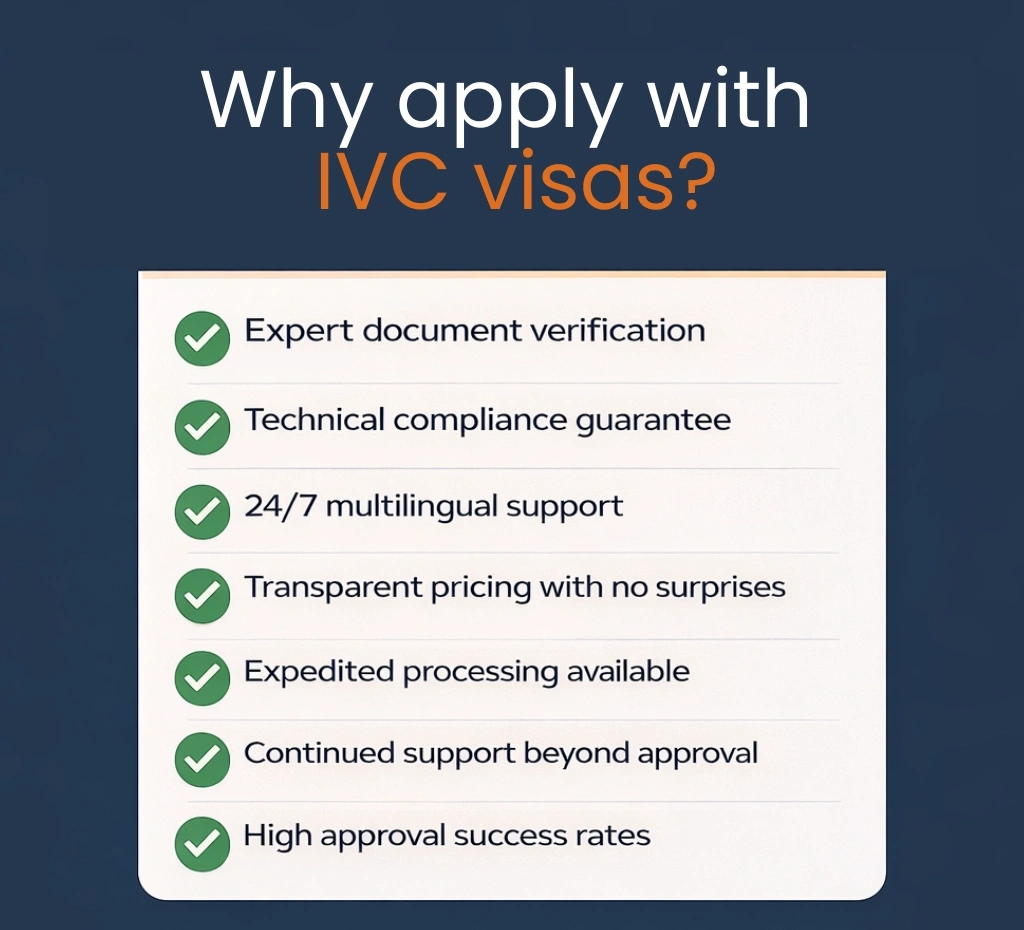
At IVC Visas, every application gets reviewed before it reaches the government portal, checking your photo, your documents, and your category against what you're actually traveling for. Whether this is your first India trip or your fifth, that review protects the fee you've already paid and the trip you're planning around it.
Get in touch if you have questions, or start your application whenever you're ready.
Disclaimer: IVC Visas is an independent visa service provider. We assist with application preparation and submission to official government portals. Final visa approval decisions are made solely by Indian immigration authorities. All information is based on current regulations as prescribed by the Government of India, which may change. Always verify the latest requirements before travel.