Most travelers who overstay an India visa did not plan to. A flight got rebooked. A family emergency extended a trip by a week. A traveler simply miscounted the days on a multi-city itinerary and didn't notice until they were already past their visa's validity. Whatever the reason, the moment your permitted stay ends and you're still in India, you've entered a legal process governed by the Bureau of Immigration, under the Ministry of Home Affairs, and it does not resolve itself by simply booking a flight home.
This is one of the most consequential situations an India e-Visa holder can find themselves in, and it is consistent towards any eligible national of Switzerland, Germany, Malaysia or others who are at fault.
What Overstaying Actually Means Under The Law?
India's immigration framework changed significantly with the Immigration and Foreigners Act, 2025, which consolidated several older laws, including the Foreigners Act of 1946, into a single unified system. Under this framework, the Bureau of Immigration's official position is direct: if the extension or conversion of a visa, or permission to continue a stay, is not granted within the validity of the current visa, the foreign national must depart from India. Failure to depart is described specifically as a willful illegal overstay, and is treated in accordance with the law.
The word "willful" matters here, though not in the way people sometimes assume. It does not mean the government distinguishes between someone who deliberately ignored their visa expiry and someone who made an honest mistake. It means that once your visa has expired and you have not taken any action to regularize your status, from the moment that expiry passes, your continued presence in India is treated as a legal violation, regardless of your intentions.
The Official Penalty Range
The Bureau of Immigration states this plainly: under various sections of the Immigration and Foreigners Act, 2025, foreigners found violating any of the provisions of the Act, including overstay, non-registration, and engaging in activities inconsistent with the visa granted, are liable for penalties ranging from ₹10,000 to ₹3,00,000 per offence, in addition to potential imprisonment.
This is a wide range, and deliberately so. The actual amount imposed in any individual case depends on the specific circumstances, including the duration of the overstay, whether it appears to be a genuine oversight or a more serious violation, and the discretion of the jurisdictional FRRO handling the case. Be cautious of any source online presenting a precise, tiered fee schedule (for example, claiming a fixed amount for 1 to 30 days and a different fixed amount for 31 to 90 days) as though it were official government policy. No such published tiered schedule appears on the Bureau of Immigration's own site. What is officially confirmed is the outer range, ₹10,000 to ₹3,00,000, applied per offence at the authority's discretion.
The official guidance is equally direct that violating India's visa norms is likely to affect the chances of obtaining entry into India, or Indian visas, in the future. This consequence extends well beyond the immediate financial penalty and the immediate trip.
Exit Permit: You Cannot Simply Fly Home, Overstay or Not
This is the detail that surprises the most people, and it's confirmed directly by the Bureau of Immigration.
Foreigners who are overstaying in India, or who have violated their visa conditions, require an Exit Permit specifically to depart the country. You cannot simply present yourself at airport immigration on your outbound flight and leave, the way you would with a valid visa. Airline check-in staff and immigration officers are positioned to catch this before you ever board, and attempting to depart without one will result in your travel being stopped at that point, not resolved after the fact.
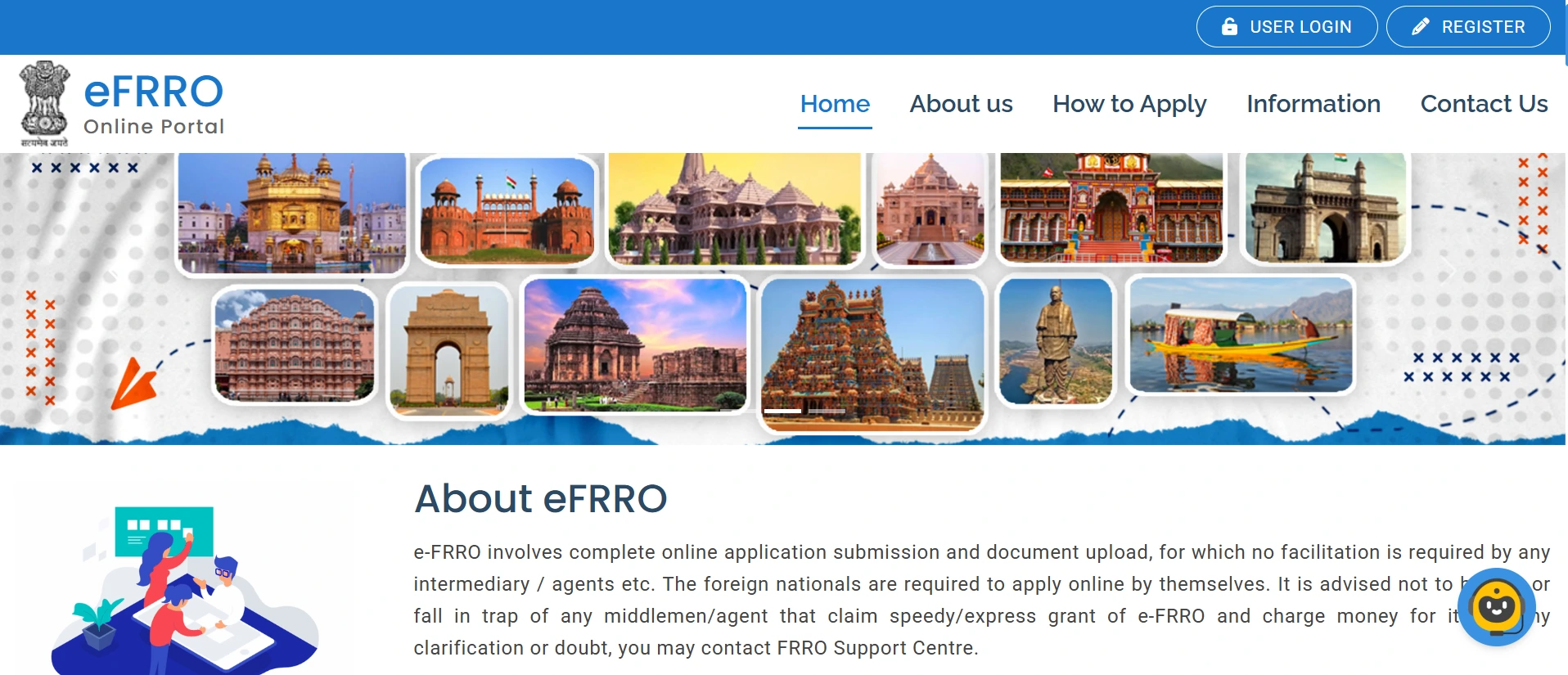
The Exit Permit is obtained through the same eFRRO system, used for visa extensions and conversions. It functions as official confirmation that your overstay or violation has been reviewed and that you are cleared to leave India, generally alongside settlement of any applicable penalty.
What to Do the Moment You Realize You're Going to Overstay?
The single most important thing to understand is that the correct action happens before your visa expires, not after.
🚨 If you still have valid time remaining on your visa: The official channel is to apply for the appropriate visa service, extension or otherwise, through indianfrro.gov.in. The Bureau of Immigration's guidance is explicit that this request must be made within the validity of your current visa, allowing reasonable time for processing. Applying on the last possible day, when the system may already be under load or when unexpected document requests could push you past your validity, is not the same as applying with genuine buffer.
🚨 If your visa has already expired: The extension route is no longer available to you in the same way, since that specific service requires the applicant to be within their current visa's validity when applying. At this point, you are in overstay, and your correct next step is to apply for an Exit Permit through the same eFRRO system, being fully transparent about your situation, the reason for the overstay, and your intended departure date.
In both cases: Do not wait, and do not simply purchase a flight home hoping the situation resolves itself at the airport. It will not. Immigration authorities have full visibility of your visa status the moment your passport is checked.
Common Scenarios Worth Understanding Specifically
📌 A flight cancellation or rebooking pushes you past your visa's expiry.
This is treated as an overstay regardless of the reason for the delay, since the visa's validity is fixed regardless of external circumstances. Apply for the Exit Permit as soon as you know you will not make your original departure, rather than waiting until the actual expiry date passes.
📌 A medical emergency prevents departure.
This is precisely the kind of justifiable reason the extension process exists to address, provided it is raised while your visa is still valid. Supporting medical documentation strengthens this kind of application meaningfully.
📌 You simply miscounted your permitted days.
This is more common than it sounds, particularly on the 1-year and 5-year e-Tourist Visa, where the 180-day annual calendar year cap is often confused with a per-visit limit. If you realize this before your actual overstay begins, correct your travel plans immediately. If you realize it after the fact, the Exit Permit route applies.
📌 You're mid-trip on a multi-city itinerary and lose track of your visa's exact expiry date.
Set a calendar reminder the day your ETA is approved, not the day you land in India. This single habit prevents the majority of accidental overstays.
The Consequences Extend Beyond the Immediate Penalty
Settling the financial penalty and obtaining an Exit Permit resolves your ability to leave India on that specific trip, but it does not erase the incident from your immigration record. The Bureau of Immigration states clearly that violating visa norms is likely to affect future entry into India and future Indian visa applications. A single overstay, even a short and clearly unintentional one, can result in additional scrutiny on subsequent India e-Visa applications, requests for supporting documentation that wouldn't otherwise be asked for, or in more serious cases, a period of restricted eligibility.
This is worth weighing seriously against the temptation to simply wait a day or two "to sort things out" once a visa has technically expired. The record of an overstay exists from the moment it happens, regardless of how quickly it's subsequently resolved.
IVC Visas summarizes the consequences of overstaying an India Visa. Stay aware and prepare your itinerary accordingly.
What This Means If You're Currently Planning a Trip?
The most effective protection against ever needing this information in a real situation is building appropriate buffer into your travel plans from the outset. If your itinerary has any genuine uncertainty, connecting flights with tight layovers, a return date that depends on factors outside your control, or a trip length close to your visa's maximum permitted stay, apply for a visa category or duration that gives you meaningful margin, not one that matches your intended trip exactly to the day.
For the India e-Tourist Visa, this might mean choosing the 1-year multiple entry option over the 30-day single-window visa if there's any real possibility your plans shift. For business travelers on the e-Business Visa, understanding the 180-day per-visit cap clearly, rather than assuming it works identically to the tourist visa's calendar year cap, avoids one of the more common sources of confusion that leads directly to this exact situation.
Getting the Original Application Right Is Where This Starts!
An overstay is rarely the first mistake in the sequence. It's usually downstream of a visa applied for without enough attention to validity dates, entry conditions, or the specific rules attached to that category, details that are easy to misjudge under the pressure of booking a trip. At IVC Visas, we review your application, category selection, and travel dates before submission, on both standard and express service, precisely so the visa you receive genuinely matches the trip you're actually planning, rather than becoming a source of confusion once you're already in India.
Check your eligibility, confirm current pricing for your nationality, and start your India e-Visa application with a duration and category that genuinely fits your plans, not just the minimum that technically covers them.
Contact our team if you're already mid-trip and unsure about your visa's expiry or remaining validity.
We can help you understand your situation before it becomes an overstay.
Disclaimer: IVC Visas is an independent visa service provider. We assist with application preparation and submission to official government portals for India e-Visa applications. Overstay penalties, Exit Permits, and visa extensions are handled directly through the Bureau of Immigration and the eFRRO system, and are outside the scope of what IVC Visas processes. Final decisions on penalties, extensions, and Exit Permits are made solely by Indian immigration authorities under the Immigration and Foreigners Act, 2025. All information is based on current regulations as prescribed by the Government of India, which may change. Always verify the latest requirements via the official Bureau of Immigration website before travel.