
Kerala Backwaters: Complete Travel Guide for Foreign Visitors with an India e-Visa
Kerala moves slower than the rest of India, and that is the whole point. Canals lined with coconut palms, rice paddies below sea level, a houseboat drifting past villages where life still runs on the water. Most visitors arrive expecting a postcard. They leave talking about the small things: breakfast on the deck, a kingfisher on a pole, the quiet.
The trip itself is easy. The paperwork before it is where people slip. IVC explains the India e-Visa rules, which Kerala airports you can actually land at, the official rules on the water, and the unspoken etiquette nobody puts on a booking page.
Start With the Visa, Not the Houseboat Booking!
For a backwaters holiday, the India e-Tourist Visa is the right category. It comes in three durations: 30 days (double entry), 1 year and 5 years (both multiple entry). The 30-day option covers most Kerala trips comfortably. If you might come back, or you’re combining Kerala with other regions, the longer options are worth a look.
How to apply?
- Confirm your nationality is eligible and choose the India e-Tourist Visa category.
- Apply between 4 and 120 days before arrival. Aim for 2 to 3 weeks ahead, because real-world processing often runs longer than the official minimum.
- Have a passport valid for at least 6 months, with 2 blank pages, plus a compliant photo and a clear scan of your passport’s bio page.
- Pay the fee for your nationality, plus the bank charge (3% for cards, 4% for PayPal).
- Wait until your status reads GRANTED, then download your ETA from the government portal. The approval email is not the ETA. Print it.
- Complete the e-Arrival Card within 72 hours before you land. It’s separate from the visa and free through official channels.
As the e-arrival card is necessary along with the India e-visa, IVC makes sure that every traveler who applies through us has filled it out on time.
Rules to keep in mind:
- The India e-Visa cannot be extended or converted once granted.
- The 30-day visa counts from your first arrival, not from the day you apply.
- The 1-year and 5-year visas cap total stay at 180 days per calendar year.
- No itinerary, hotel booking or houseboat voucher is needed to apply for a tourist visa.
Travelers from Finland, where Kerala’s wellness retreats are a popular winter escape, use the same process as everyone else. So do visitors from Israel, many of whom come for Kochi’s historic Jewish quarter. Fees differ by nationality, but the steps don’t.
Which Kerala Airports Accept an India e-Visa?
This is where your visa and your flight booking meet. An India e-Visa works for entry only through designated airports and seaports. Kerala has several:
📍Cochin International Airport (COK): the main gateway for the backwaters, and the best choice for Alleppey, Kumarakom and Kochi.
📍Trivandrum International Airport (TRV): the natural pick if you’re starting in the south, near Kovalam or Kollam.
📍Calicut International Airport (CCJ): useful for northern Kerala.
📍Kannur International Airport (CNN): the newest of the four, in the far north.
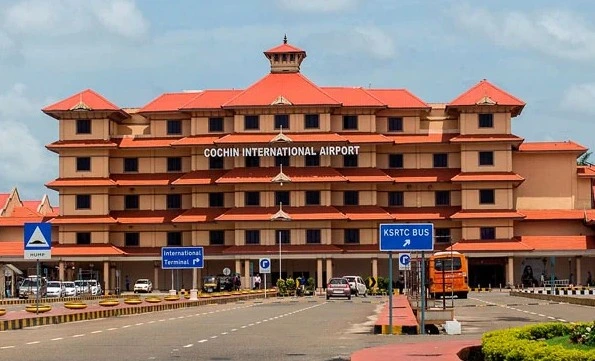
Cochin is also one of the five seaports open to India e-Visa holders arriving on cruise ships.
Published lists differ slightly between sources, and India updates its entry points from time to time, so check the current list of authorised entry and exit ports before booking flights.
Two practical points. First, if you land in Delhi or Mumbai and then fly to Kochi, that’s fine. What matters is that your first arrival in India is at a designated port.
Second thing, exit is flexible: you can leave through any authorized Immigration Check Post.
Getting to the Backwaters and Around Kerala
Most visitors travel by road. A prepaid taxi or app-based cab from Cochin airport to Alleppey takes roughly one and a half to two hours, depending on traffic. Kumarakom is a similar distance. Your houseboat operator or resort can usually arrange the transfer, which is worth doing if you land late at night.
Kerala also has a good rail network, and trains between Kochi, Alleppey and Trivandrum are frequent and inexpensive. If you plan to use them, foreign visitors can book through IRCTC, including a dedicated Foreign Tourist Quota. Remember that you must carry your original passport and valid visa on board, so keep them in your day bag.
For short hops between jetties and villages, the local ferries run by the state water transport service are slow, cheap and a good way to see the backwaters without booking a private boat.
Where to Base Yourself in the Backwaters?
The backwaters aren’t one place, and each base has a different feel.
- Alleppey (Alappuzha): The classic houseboat hub. Busy in season, but it delivers the image you came for. Roughly two hours by road from Kochi.
- Kumarakom: Quieter, with bird-watching on Vembanad Lake and calmer resorts. A good pick if Alleppey’s crowds put you off.
- Kollam (Ashtamudi Lake): Less touristy, with smaller canoe trips through village channels. A public boat service has long linked Kollam and Alleppey, so check current schedules if you want the slow, budget version.
- Kochi and Fort Kochi: Not backwaters in the strict sense, but an easy base with Chinese fishing nets, old churches and cafes before or after your boat days.
A sensible first trip is two nights in Kochi, one night on a houseboat, and a couple of nights at a lakeside stay in Kumarakom.
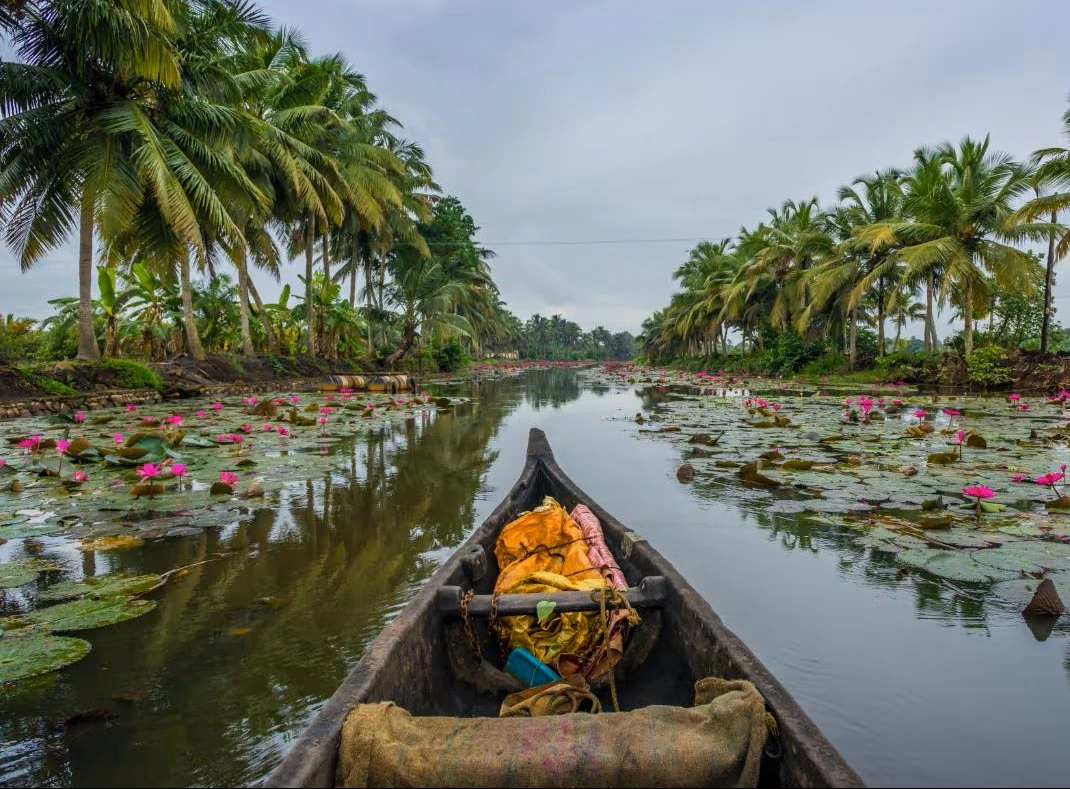
How Many Days Do You Need? A Sample 7-Day Route
Seven days is a comfortable first visit. It gives you the backwaters without rushing and leaves room for one extra stop. Here is a route that works well for most first-timers:
📆 Days 1 and 2, Kochi.
Land at Cochin International Airport, rest, then spend a day in Fort Kochi. Walk to the Chinese fishing nets, the old churches and Jew Town, where the Paradesi Synagogue dates back to the 1500s.
📆 Day 3, Alleppey.
Transfer by road, roughly one and a half to two hours from the airport, and board your houseboat around noon.
📆 Day 4, Kumarakom.
Disembark at about 9 am and move on to a lakeside stay. Spend the afternoon on Vembanad Lake, which is good for birdwatching in the cooler months.
📆 Days 5 and 6, a hill detour or a slow day.
If you have the energy, Munnar’s tea hills are roughly four to five hours inland from Kochi each way. If you’d rather stay on the water, add a village canoe trip or an Ayurveda day.
📆 Day 7, back to Kochi.
Don’t schedule this for the day of your international flight. Give yourself a buffer night, because Kerala’s roads and monsoon showers don’t always keep to a timetable.
If you only have four or five days, drop the hill detour and keep Kochi, one houseboat night and one Kumarakom stay.
The Official Rules on the Water
Houseboats in Kerala operate under Kerala Tourism guidelines and local waterway rules. These are the ones you’ll actually notice:
- Fixed timings. Overnight stays typically begin at about noon and end at 9 am the next day.
- No night cruising. Boats generally anchor by around 5:30 pm and don’t move again until morning, partly so local fishermen can lay their nets. A “22-hour cruise” involves far fewer hours of actual moving.
- Photo ID at check-in. Carry your passport. Operators are required to record guest details.
- Life jackets. Expect to wear them on deck while the boat is moving.
- No swimming in the lakes. Many operators prohibit it, and it’s rarely safe.
- Check the grading. Reputable boats display a Kerala Tourism classification certificate. Book through an operator you can verify, not a stranger on the jetty.
- Keep it clean. Single-use plastic is discouraged across Kerala, and littering the water can attract fines.
Do you need a special permit for the backwaters? No. Your India e-Visa is enough. If you’re pairing Kerala with Lakshadweep, that’s different: those islands need separate permission, so confirm before planning.
Choosing a Houseboat: What to Ask Before You Pay
Houseboats range from simple to genuinely luxurious, and the photos on booking sites can look identical. A few questions separate a good stay from a disappointing one:
🔎 Is it private or shared?
A private boat is yours alone. Shared boats cost less but put you with strangers.
🔎 When does the air conditioning run?
Some categories only run it at night, while higher categories keep it on all day. In the hotter months, this matters more than the decor.
🔎 What is included?
Most operators serve a fixed menu of Kerala dishes. Ask whether meals, drinking water and sightseeing stops are all in the price.
🔎 Where do you board?
The check-in jetty is sometimes different from the operator’s office address. Confirm the exact location a day before.
🔎 What are the real cruising hours?
An overnight booking involves only a few hours of moving. A “night stay only” slot that begins in the evening misses the scenery entirely.
🔎 Is the boat licensed?
Ask to see the Kerala Tourism classification certificate, and check that life jackets are on board.
🔎 What is the cancellation policy?
Get it in writing, especially in peak season.
Booking through a verified operator, not someone approaching you at the jetty, is the single best protection you have.
The Unspoken Rules (What Nobody Tells You These)
Some of the most useful advice is the kind that never appears on a booking page.
✅ Dress modestly in villages and temples. Kerala is relaxed, but beachwear belongs at the beach. Covered shoulders and knees go a long way.
✅ Take your shoes off at temples, mosques and many homes.
✅ Some temples admit only Hindus. Guruvayur and Padmanabhaswamy are well-known examples, with strict dress codes too. Check before you plan a visit.
✅ Ask before photographing people, especially women, children and anyone at prayer.
✅ Alcohol is more restricted than in Goa. It’s sold through licensed outlets and served in licensed bars and hotels, and “dry days” traditionally fall on the first of each month and some festivals. If you want a drink on the houseboat, ask the operator in advance.
✅ Tip modestly. Houseboat crews, drivers and guides appreciate it, and a small amount at the end of a stay is customary.
✅ Carry some cash. Village stops, ferries and small shops often don’t take cards.
✅ Pack mosquito repellent and a light rain jacket, whatever the season; when the lakes are at their most beautiful and the insects are at their worst.
✅ ATMs are common in towns, and SIM cards can be bought at the airport with a passport copy before you leave the terminal.
✅ Ease into street food over a few days rather than on the first evening.
✅ Buy travel insurance that covers medical care for the whole trip. Private hospitals in Kerala are good, but uninsured costs can add up.
✅ Drink only bottled or filtered water, including for brushing your teeth.
Best Time to Go!
October to March is the comfortable window: cooler, drier and at its liveliest. April and May get hot and humid. June to September is monsoon season. Boats still run and the greenery is spectacular, but expect rain and fewer visitors. The monsoon is also when many people book Ayurveda programs, and Alleppey’s famous snake boat races are usually held in the later monsoon months, so check the date if that interests you.
Ayurveda and Your India Visa Category
Kerala is the center of Ayurveda in India, so visa category matters. Short wellness programs, yoga and relaxation retreats fit the India e-Tourist Visa. But if you’re seeking treatment for a diagnosed medical condition, that falls under the India e-Medical Visa, which covers Ayush treatment and now relies on a system-generated medical invitation letter. Choosing the wrong category is a condition violation, not a technicality. If you’re unsure which one applies, ask us before you apply.
Mistakes That Trip Up Visitors!
- Booking flights into a non-designated airport. Check the entry list first.
- Applying too late. Houseboats and resorts book out in peak season, and they don’t always refund.
- Skipping the e-Arrival Card. It must be done within 72 hours before landing.
- Mismatched names. The name on your visa, passport and houseboat booking should all be identical.
- Assuming you can extend. If you fall in love with Kerala and want another week, you can’t extend an India e-Visa.
What to Carry for Hotels and Immigration?
Keep a small document folder in your day bag. Hotels, resorts and houseboat operators in India record foreign guests, so you’ll be asked for your passport and visa at check-in. Carry the original passport, a printout of your approved ETA, and a photocopy of both as a backup. Keep a screenshot of your E-Arrival Card confirmation too. If your plans change or a booking is lost, having the paperwork in one place saves a lot of stress.
Before You Book the Boat:
Kerala rewards slow travel, and a visa mix-up is the quickest way to ruin it.
At IVC Visas, we review your application, photo and category before submission, so a preventable error doesn’t cost you a booked houseboat. Start your India e-Visa application once your dates are set!
Let us do the hard part, so you can focus on your journey to Kerala!
Disclaimer: IVC Visas is an independent visa service provider. We assist with application preparation and submission to official government portals. Final visa approval decisions are made solely by Indian immigration authorities. All information is based on current regulations as prescribed by the Government of India, which may change. Always verify the latest requirements before travel.