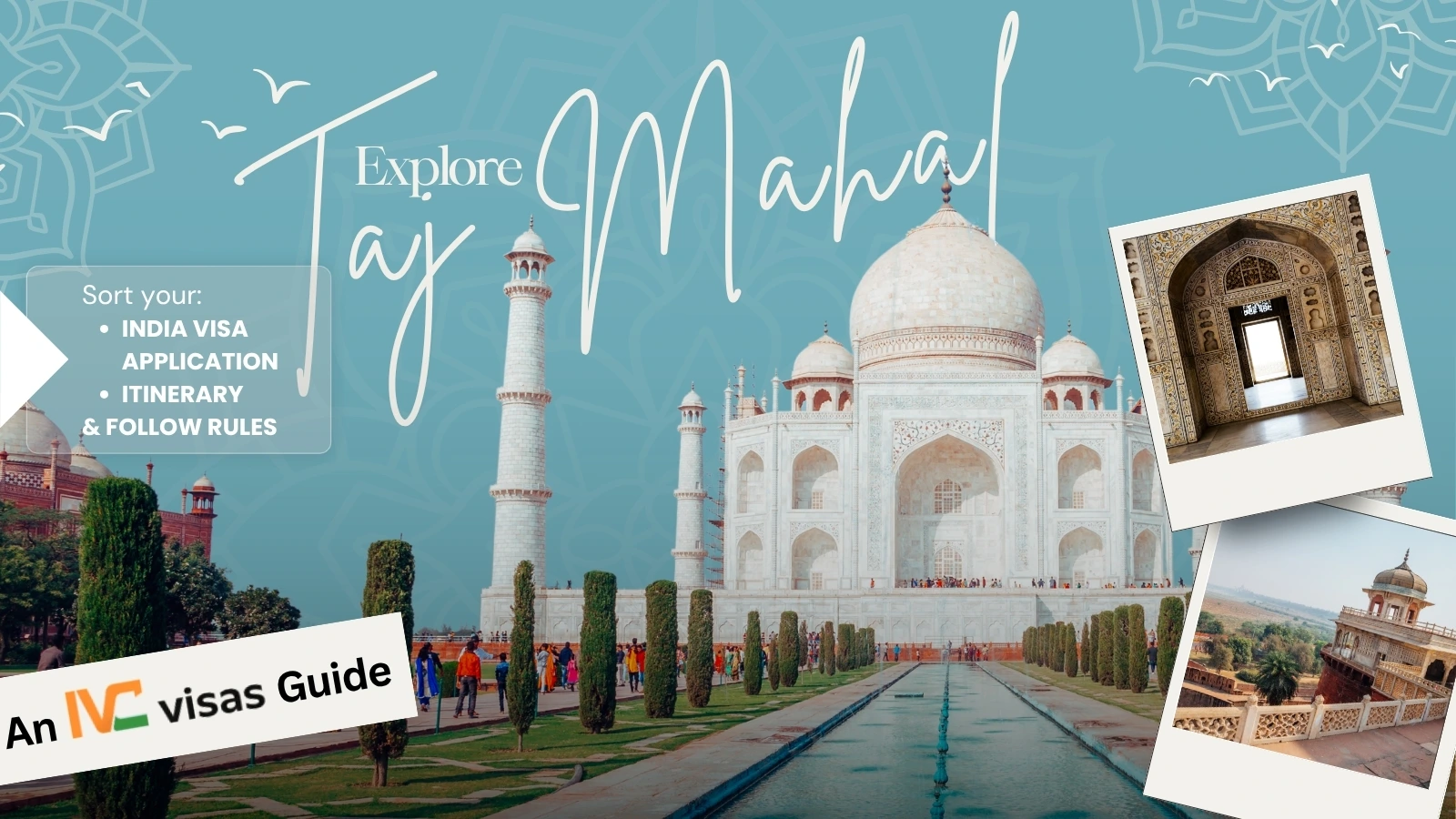
Visiting the Taj Mahal on an India e-Visa: Tickets, Rules, Itinerary and the Things Nobody Mentions!
A surprising number of Taj Mahal trips go wrong before anyone sees the dome. The visa arrives late. The only free day in Agra turns out to be a Friday, when the monument is closed to regular visitors. A tripod gets turned back at the security check, and the “guide” who promised to skip the queue turns out not to know where the ticket office is.
None of this is hard to avoid once you know it. This post follows the trip in the order it actually happens: the India e-Visa first, because nothing else works without it, then the timing, the itinerary, the tickets, the unwritten rules and the precautions worth taking in peak season.
Your passport decides which India visa rules and fees apply to you, as the application fees vary according to your own country. Travelers from Fiji, Netherlands, Spain and other countries can check if their nationality makes them eligible to apply for India e-visa before starting.
There is no 'specific visa' for Taj Mahal, but there is the Right one!
You don’t apply for anything Taj-specific. Visiting the monument counts as ordinary sightseeing, so the India e-Tourist Visa covers it. The official portal lists nine India e-Visa categories in total, and for a trip like this only a few matter.
The India e-Tourist Visa comes in three durations. The 30-day visa allows double entry, and its clock starts on the day you first arrive in India. The 1-year and 5-year versions allow multiple entries and start from the day your ETA is granted, with total time in India capped at 180 days per calendar year. For a single trip built around Delhi and Agra, the 30-day visa is usually enough. If you plan to come back within the year, the 1-year visa is worth a look.
If any part of the trip is business, even a meeting squeezed in around the sightseeing, you need the India e-Business Visa instead, because the tourist visa does not cover commercial activity and it cannot be converted into one either; learn it through IVC:
Medical travelers use the India e-Medical category, and an e-Transit Visa applies only if you will leave the airport during a layover. All of them are non-extendable and non-convertible once issued.
How does the India visa process actually run?
➤ You apply online, upload a PDF scan of your passport photo page and a JPEG photograph, pay the fee, and receive your Electronic Travel Authorization by email. Your passport needs at least six months of validity from your arrival date and two blank pages. The photograph needs a plain white background, no glasses, and a file name made only of letters. Most rejections come from small things like a name that doesn’t match the passport or a photo that fails manual review, not from anything dramatic.
➤ The India visa fee depends entirely on your nationality and visa type. A few countries pay nothing at all, while others pay a lot more for longer visas, so check yours before you apply.
➤ On timing, the official window is 72 hours, but real-world processing averages 8 to 10 business days. Apply 2 to 3 weeks before you fly, and 3 to 4 weeks if you’re travelling between October and February. If your departure is close, IVC Visas offers both standard and express service. Express speeds up preparation and submission on our side, though the government’s own review time stays the same for everyone.
➤ Wait until your status reads Granted before you lock in anything you can’t easily cancel.
➤ Then complete the e-Arrival Card within 72 hours before you arrive. It is separate from the visa, free, and must be done before you board your flight, not at immigration.
Your India e-Visa only works through authorized ports of arrival. Most international travelers heading for Agra land in Delhi, but check the authorized ports list before booking flights, since your first landing in India has to be on it.
Why peak season changes your timeline?
Agra’s busy season runs roughly from October to March, when the weather is at its kindest. It is also the stretch when India visa applications slow down, hotels near the Taj fill early, and sunrise visits get crowded. All three pull in the same direction: decide your dates earlier than feels necessary and apply for the India visa first.
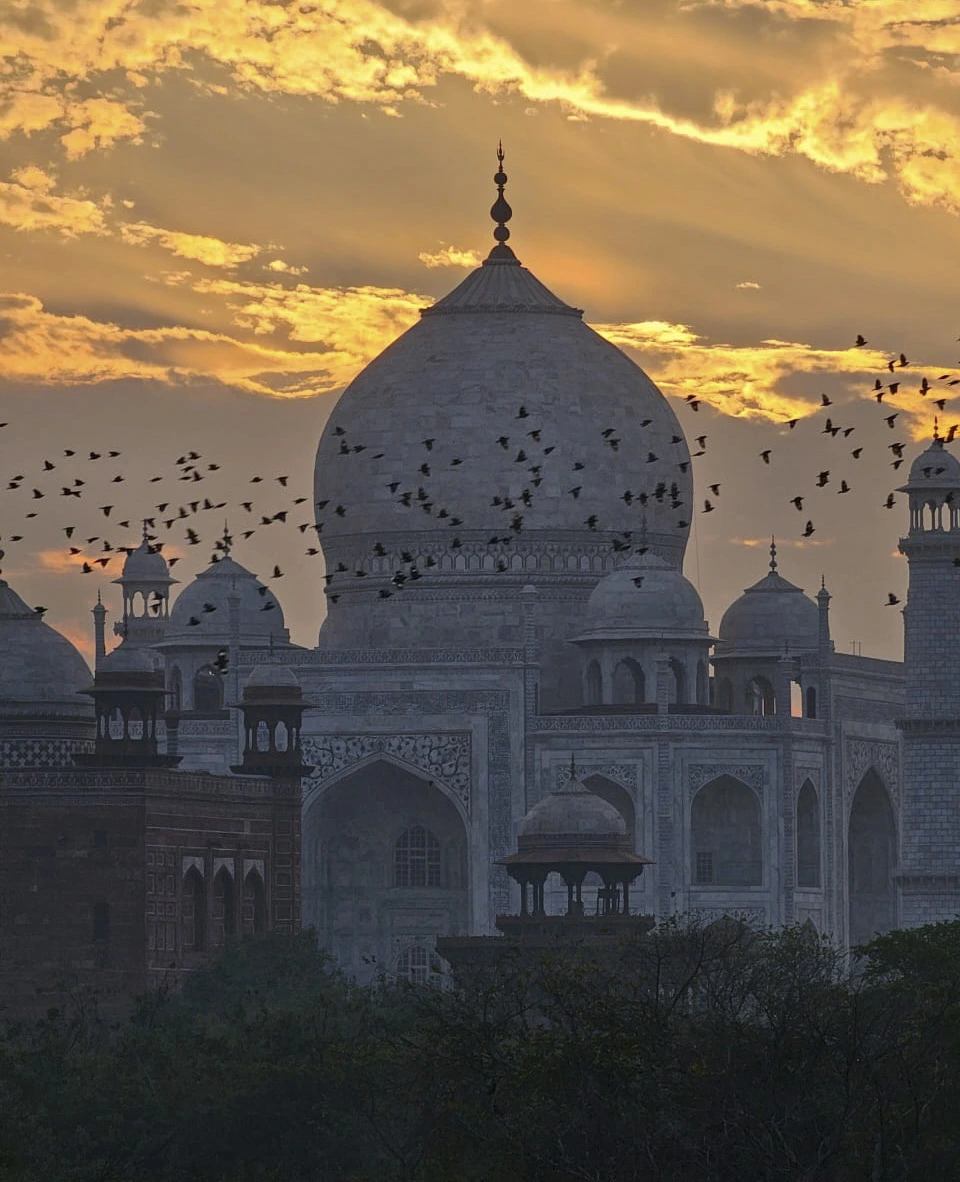
Winter brings its own twist. Fog in the north from about December to February can delay trains and flights and flatten the morning light you came for. Summer, from April to June, can push temperatures past 40 degrees Celsius, which makes a midday visit miserable. Early mornings work in every season, and that matters for the itinerary below.
A realistic three-day Route
🗓️ Day one: land in Delhi.
Clear immigration, pick up a local SIM, and keep the afternoon light. Jet lag does the planning for you.
🗓️ Day two: Delhi to Agra. Fast trains and cars both cover the route, with the quickest trains taking roughly two hours. Use the afternoon for Agra Fort, then watch the sunset from Mehtab Bagh, the garden across the river that looks back at the Taj. Hotels in Agra will ask for your passport and visa at check-in, which is standard for foreign guests.
🗓️ Day three: sunrise at the Taj Mahal. Be at the gate before it opens, when the crowds are thinnest. Afterwards, visit Itmad-ud-Daulah, often called the Baby Taj, then continue to Fatehpur Sikri on the way to Jaipur if you’re heading that way.
One calendar check changes everything: the Taj Mahal is closed to regular visitors on Fridays. Work backwards from that. If your Agra day falls on a Friday, swap the days around so the Taj lands on another day and Agra Fort or Fatehpur Sikri fills the Friday.
Tickets, timings and who pays what?
The Taj Mahal opens at sunrise, closes at sunset, and is shut to regular visitors on Fridays. Foreign visitors pay a much higher ticket price than Indian citizens, and entry to the main mausoleum costs extra. At the time of writing, the foreign ticket comes to around ₹1,300 with the add-on, but the Archaeological Survey of India sets these figures and revises them, so confirm the current price before you go.
You can buy tickets online or at the counters, and foreign visitors use a separate queue from domestic ones. Tickets are time-limited, commonly around three hours, so don’t buy yours early and then wander off to breakfast.
Carry your passport, because foreign-category tickets are checked against ID.
Night viewing exists but is limited to a few evenings around the full moon, and it needs separate tickets booked in advance. If it matters to you, ask the ASI directly rather than relying on a hotel’s word.
The rules nobody prints on the ticket!
Some of these are posted at the gate and some you only learn by getting turned back.
- Shoes come off on the white marble platform around the main mausoleum. Shoe covers are normally provided, so you don’t have to walk barefoot.
- No photography inside the tomb chamber. Phones and still cameras are fine in the grounds and outside the building. Flash near the cenotaphs is a bad idea.
- Tripods need written ASI permission, and drones are banned outright. The Taj sits in restricted airspace, so don’t pack a drone at all.
- Food, tobacco, alcohol, power banks, chargers and spare batteries are not allowed in. A small bottle of water is generally fine. There are no restaurants inside, so eat before you arrive.
- Big bags slow everything down. Security is airport-style. Free cloakrooms near the gates will hold what you can’t carry in.
- Don’t touch or lean on the walls, and keep your voice down in the mausoleum.
Most of these come from the Archaeological Survey of India’s own visitor rules, and staff enforce them every day.
Precautions worth Considering!
📌 Buy tickets only from the official online booking or the official counters.
Anyone who approaches you outside saying the Taj is “closed today,” the queue is “two hours long,” or they can arrange a special entry is working on commission, not helping you.
📌 If you want a guide, hire a licensed one who can show an ID badge from the tourism authorities, and agree the price before you start.
📌 Keep your passport and printed ETA in your day bag, not packed away, but keep them safe in crowds, since pickpockets work the queues like they work anywhere busy.
📌 Drink water, take sun protection in warm months, and carry a light layer for cold mornings.
📌 Never schedule your Agra day as your last valid day on the visa as India e-Visas cannot be extended, and overstaying brings penalties.
📌 An Exit Permit requirement before you can leave.
📌 If a real emergency stops you leaving in time, apply for an extension at FRRO before the visa expires.
Before-you-go checklist
✅ Before you apply
- Passport valid for at least six months from arrival, with two blank pages
- Visa category matched to your trip: tourist for sightseeing, business if any work is involved
- Agra dates chosen so the Taj does not fall on a Friday
✅ Before you submit
- Name, date of birth and passport number exactly as printed in the passport
- Compliant photograph and a legible passport scan, with plain-letter file names
- Standard or express service chosen based on how close your departure is
✅ Before you board
- ETA showing Granted, with a printed copy in your bag
- e-Arrival Card completed within 72 hours before arrival
- First landing confirmed at an authorised port, and a return or onward ticket ready
✅ At the Taj Mahal
- Passport on you, light bag, no tripod, no food, no chargers
- Sunrise arrival, shoe covers on, and no photos inside the tomb chamber
Get the ETA first, and the sunrise takes care of itself
Dawn at the Taj Mahal comes with a deadline, and it isn’t the gate opening. It’s your ETA. Apply while your dates are still flexible, pick standard or express depending on how close your flight is, and let our team check the application before it goes in, so one wrong character doesn’t cost you the trip.

Start your India e-Visa application with IVC, or directly ask our team if you want your dates checked first.
Disclaimer: IVC Visas is an independent visa service provider. We assist with application preparation and submission to official government portals for India e-Visa applications. Taj Mahal ticket prices, timings, night viewing and visitor rules are set by the Archaeological Survey of India and can change, so verify current details through official ASI channels before you travel. Final visa approval decisions are made solely by Indian immigration authorities. All information is based on current regulations as prescribed by the Government of India, which may change. Always verify the latest requirements before travel.