Most travelers applying for an India e-Visa never think about yellow fever at all, and for the majority, they don't need to. India has no local yellow fever transmission, and for a traveler flying in from Europe(Romania, France, etc), North America, most of Asia, or Australia, this entire topic simply doesn't apply to your trip.
But for a specific group of travelers, anyone arriving from, or who has recently passed through, a small list of countries in Africa and South America, this is one of the few health requirements that can stop you at the airport regardless of how perfect your India e-Visa application was. Getting your visa approved and skipping this step is a real way to lose several days of your trip to quarantine. Here's exactly who this applies to, and how to make sure it doesn't affect you.
Does Yellow Fever Affect Your India e-Visa Application Itself?
NO, and this is worth clarifying immediately. The yellow fever certificate is not a document uploaded during your India e-Visa application, and it has no bearing on whether your India e-Visa is approved or rejected. Your e-Visa and your yellow fever certificate are two entirely separate requirements, checked at two different points:
The India e-Visa is verified before you fly and at immigration, while the yellow fever certificate is checked specifically at the health/quarantine counter, which for at-risk arrivals sits before or alongside the immigration desk itself.
You can hold a fully approved India e-Visa and still be quarantined on arrival if you needed a yellow fever certificate and didn't have a valid one. The two systems don't talk to each other; your visa approval doesn't get flagged in advance, and there's no warning built into the e-Visa process itself.
Who Actually Needs a Yellow Fever Certificate for India?
Under India's rules, enforced by the Ministry of Health and Family Welfare through its International Health Regulations framework, a valid yellow fever vaccination certificate is required from:
- Travelers 9 months of age or older
- Arriving in India within 6 days of departing from, or transiting through, a country with risk of yellow fever transmission
If neither condition applies to you, you don't need to think about this at all. This is not a universal requirement for every international arrival into India; it applies specifically and only to travelers connected to the listed at-risk countries within that 6-day window.
The Official List of Countries That Trigger This Requirement
This list is maintained and periodically updated by the World Health Organization, and India applies it directly. As it currently stands:
🌍 Africa: Angola, Benin, Burkina Faso, Burundi, Cameroon, Central African Republic, Chad, Congo, Côte d'Ivoire, Democratic Republic of Congo, Equatorial Guinea, Ethiopia, Gabon, The Gambia, Ghana, Guinea, Guinea-Bissau, Kenya, Liberia, Mali, Mauritania, Niger, Nigeria, Rwanda, Senegal, Sierra Leone, Sudan, South Sudan, Togo, and Uganda.
🌎 Central and South America: Argentina, Bolivia, Brazil, Colombia, Ecuador, French Guiana, Guyana, Panama, Paraguay, Peru, Suriname, Trinidad and Tobago, and Venezuela.
If you're flying into India directly from any of these countries, or if your itinerary includes any of them as a stop, this requirement applies to you. Given that this list is periodically revised, it's worth checking the current version before you travel rather than relying on a list from a few years ago.
The Detail That Catches People Off Guard: Transit Counts Too
This is the single most common way travelers get caught out, and it has nothing to do with whether you actually left the airport.
If your itinerary routes you through a listed country as a layover: Addis Ababa, Nairobi, or several South American hub airports are common examples on India-bound routes, Indian health authorities can count that as transit through an at-risk country, even if you never passed through immigration and stayed entirely within the transit area the whole time. The clock is based on your ticketed routing and the timing between flights, not on whether you personally set foot outside the terminal.
A Delhi–Addis Ababa–Zanzibar–Delhi itinerary, for instance, can trigger a certificate check on your return to India, purely because Addis Ababa sits on the list; regardless of how brief that layover was or that Zanzibar itself was the actual destination. If your trip involves any hub in Africa or South America, it's worth checking that specific airport against the list before assuming a short layover doesn't count.
What Happens If You Don't Have One?
This is not a minor inconvenience; it's an enforceable quarantine measure, applied at the port of entry by immigration officers acting on health authority guidance.
Travelers without a valid certificate or presenting one that's defective, are quarantined until either the certificate becomes valid or six days have passed since their last possible exposure, whichever comes first. There is no diplomatic immunity from this, and a medical exemption letter does not automatically grant immunity from quarantine either; it's assessed case by case.
What makes a certificate "defective" and triggers exactly this outcome:
- Vaccine administered at a non-designated or unauthorized centre
- Certificate issued less than 10 days before arrival
- Missing clinician stamp, signature, or vaccine batch number
- Incorrect personal details that don't match your passport
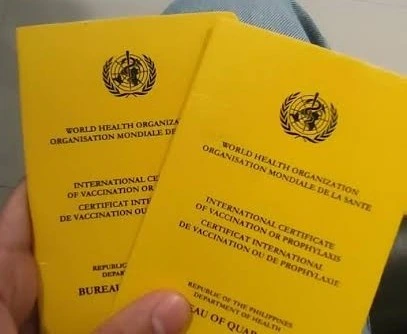
- A photocopy, scan, or photo on a phone; the original physical document is the only accepted format
- Any alteration or overwriting on the certificate itself
That last point trips up a genuinely large number of travelers who assume a clear photo of their certificate will suffice at the counter. It won't. Carry the original.
How Long Before Vaccination Does It Actually Become Valid?
The vaccine takes 10 days to confer immunity after a single 0.5ml dose, given subcutaneously. Once that 10-day window has passed, the certificate is considered valid for the life of the person vaccinated; a change made globally in 2016 that removed the older 10-year revalidation requirement. If you were vaccinated at any point in your life and still hold that original certificate, you generally don't need a booster.
The practical timing rule: Get vaccinated at least 10 days before you travel, not 10 days before your India arrival specifically if your itinerary includes an earlier international leg; build the full 10 days in before you first depart for any at-risk country on your route.
Getting Vaccinated in India Before Onward Travel
If you're an India-based traveler heading to one of the listed countries whether for a safari in Kenya, a trip to Uganda, business travel to a West African country, rather than an inbound traveler, the same certificate is required for your entry into most of these destination countries too, and it must come from an authorized centre.
In India, yellow fever vaccination is administered exclusively at centres authorized by the Directorate General of Health Services under the Ministry of Health and Family Welfare, generally government hospitals and port health offices in major cities including Delhi, Mumbai, Chennai, Kolkata, Hyderabad, and Kochi, among others. Using an unauthorized private clinic invalidates the certificate entirely, regardless of how official it looks, the health ministry has issued specific warnings about unauthorized centres issuing certificates that don't hold up at any border.
What to bring to the appointment:
- Your original passport (mandatory)
- Payment for the vaccine (a fixed, government-set fee)
- For children, their vaccination/immunization record
Who should not receive this vaccine, per official contraindication guidance: anyone with an egg, chicken, or gelatin allergy (the vaccine is egg-based); pregnant women, or those who could be pregnant within two weeks; infants younger than 9 months; anyone with HIV/AIDS with a significantly weakened immune system; anyone immunocompromised due to cancer treatment, transplant, or certain medications; and those with specific thymus, liver, or kidney conditions. If any of this applies to you and you have a genuine need to travel to an at-risk country, a medical exemption letter from a travel health physician is the correct route — though bear in mind this doesn't guarantee immunity from quarantine on your return to India.
A Practical Checklist Before You Fly
✅ Check whether your origin country, or any layover on your route, appears on the current endemic-country list
✅ If it does, get vaccinated at least 10 days before departure, at an authorized centre only
✅ Carry the original physical certificate, not a photocopy, scan, or phone photo
✅ Check every detail on the certificate matches your passport exactly before leaving the vaccination centre
✅ If you're unsure whether a specific layover counts, check with your airline and confirm against the current WHO-aligned list rather than assuming a short connection doesn't count
Where This Fits Alongside Your India e-Visa
None of this changes your India e-Visa application itself; you don't upload a yellow fever certificate anywhere on the government e-Visa portal, and it has no effect on your approval. But it's exactly the kind of pre-travel detail that gets overlooked while focusing entirely on visa paperwork, only to cause a genuinely disruptive problem at the airport that a fully approved e-Visa does nothing to prevent.
At IVC Visas, we focus on getting your India e-Visa application right, but part of that means flagging the adjacent requirements, like this one, that can derail a trip just as easily as a visa issue can.
Start your India e-Visa application when you're ready, and confirm your yellow fever status separately well before your travel date if your route touches any of the listed countries.
Disclaimer: IVC Visas is an independent visa service provider. We assist with application preparation and submission to official government portals for India e-Visa applications. Yellow fever vaccination requirements are a separate public health matter administered by India's Ministry of Health and Family Welfare and are outside the scope of what IVC Visas processes. Final visa approval decisions are made solely by Indian immigration authorities. All information is based on current regulations, which may change. Always verify the latest requirements before travel.