India e-Visa Multiple Entry Rules, How Many Times Can You Actually Enter India?

IVC Visas answers one of the most asked question: Once your India e-Visa is approved, exactly how many times can you cross into India on it; and what can void that right before you've used it up?
Nationals of Italy, Spain, Kenya and other eligible countries are eligible for an India e-visa and can apply entirely online with IVC!
What this guide covers:
- Official entry allowances for all nine India e-Visa categories
- What "multiple entry" actually means; and what it doesn't
- The same passport rule explained
- Practical scenarios that catch off guard
- What voids your re-entry rights mid-visa
Entry Rules by Category | The Complete Official Picture
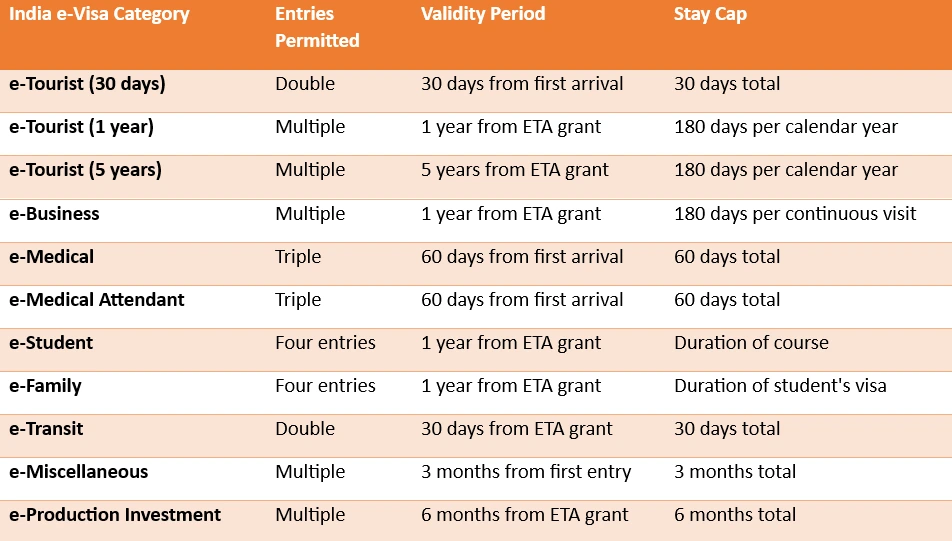
Quick Reference: Entries Allowed by India e-Visa Category
For readers who just need the number, here's the entry allowance for every category, confirmed directly against the government's e-Visa portal:
What "Multiple Entry" Actually Means?
Multiple entry does not mean an unlimited number of entries with no conditions attached. It means you may exit and re-enter India as many times as you need within the visa's validity period, subject to the applicable stay cap.
For the India e-Business Visa, multiple entry is governed by a per-visit continuous stay limit of 180 days. Each time you enter India, your continuous stay during that visit must not exceed 180 days. There is no restriction on how many separate visits you make within the one-year validity, provided no single continuous stay exceeds 180 days.
For the India e-Tourist Visa (1-year and 5-year), multiple entry is governed by an annual calendar year cap of 180 days - January 1 to December 31. You may enter and exit as many times as you choose, but your total time inside India across all visits within one calendar year cannot exceed 180 days combined. This resets on January 1 each year, not on your visa anniversary date.
The practical difference between these two caps matters significantly. A business visa holder who enters India and stays for 180 continuous days has used one visit's worth of allowance but can re-enter the next day for another 180-day continuous stay; provided the visa is still valid. An India e-tourist visa holder who accumulates 180 days in India between January and October cannot re-enter for tourist purposes until January 1 the following year, even if their visa remains technically valid.
What "Double" and "Triple" Entry Mean in Practice
➤ Double entry on the India e-Tourist Visa (30-day) means exactly two entries into India within the 30-day validity window. You enter once, exit, and may re-enter once more, but both entries must occur within 30 days of your first arrival. After the 30-day window closes, the visa is spent regardless of how many entries were used.
Note: Recent official updates show multiple entries for 30 days e-tourist visa now.
➤ Triple entry on the India e-Medical and e-Medical Attendant Visas means three entries within the 60-day validity period measured from first arrival. This accommodates travelers who may need to exit India briefly. For example, to collect a family member or manage affairs, and return for ongoing treatment. All three entries must fall within the 60-day window.
➤ Four entries on the India e-Student and e-Family Visas within the one-year validity period accommodates students who travel home during academic breaks and return for the next term. Each entry counts toward the four-entry allowance, plan these carefully across an academic year.
Why the 30-Day e-Tourist Visa's Entry Rule Is Changing?
India's electronic travel authorization system has historically capped the 30-day e-Tourist Visa at exactly two entries, a rule this article previously explained in detail above.
Recent updates show the government moving this category toward multiple entry, aligning it with the 1-year, 5-year, and Business categories, which have always allowed unlimited entries within their validity window.
The practical effect, once confirmed and fully rolled out: travelers combining an India trip with a side visit to Nepal, Sri Lanka, Bhutan, or the Maldives, then returning to India before flying home, would no longer need to upgrade to a 1-year e-Tourist Visa just to get a third entry.
The Same-Passport Rule on Re-Entry
Every re-entry into India on an India e-Visa must be made on the same passport used to apply. If your passport has been renewed between your first and second entry, you must carry both the old passport containing the ETA and your new passport when you re-enter. Immigration will check both documents. Attempting to re-enter using only the new passport without the old one can result in complications at the immigration counter regardless of ETA validity.
Check the entry count stated on your own approved ETA rather than assuming based on when you read this article — the rule may apply differently depending on your ETA's issue date.
Five Practical Scenarios That Catch Travelers Off Guard
Scenario 1 | Exiting India on a 30-day double-entry visa and returning after the window closes
Your India e-Tourist Visa (30-day) expires 30 days after your first arrival. If you exit on day 20 and attempt to return on day 32, the visa has expired. You cannot re-enter on it. A new application is required.
Scenario 2 | Accumulating 180 days by October on a 1-year tourist visa and wanting to return in November
The 180-day annual cap for the India e-Tourist Visa is per calendar year- January to December. If you have spent 180 days in India between January and October, you cannot re-enter for tourism purposes until January 1 the following year. Your visa may still be technically valid, but the annual stay allowance is exhausted.
Scenario 3 | Business visa holder staying 180 days continuously and wanting to re-enter immediately
The India e-Business Visa caps continuous stay per individual visit at 180 days, not per year. Once a 180-day continuous stay concludes, the holder may exit and re-enter immediately for another continuous stay not exceeding 180 days, provided the one-year visa validity has not expired.
Remember that if you stay in India beyond your India visa validity, you are violating 'non-extendable' rule of India e-visa. Learn with IVC Visas on how to extend your stay in case you found yourself in an emergency.
Scenario 4 | Medical visa patient needing a fourth entry
The India e-Medical Visa permits only triple entry within 60 days from first arrival. If a patient requires a fourth entry, for example, after exiting and returning twice already, they cannot re-enter on the existing visa. A new e-Medical Visa application must be submitted.
Scenario 5 | Entering through a non-authorized crossing on a re-entry
The requirement to use only India's designated international airports, designated seaports, or the four designated land ports- Raxaul, Rupaidiha, Darranga, and Jogbani — applies to every entry, not just the first. Attempting to re-enter through any other crossing voids the entry attempt regardless of how many entries remain on your visa. Check the authorized India entry and exit ports list before every trip, not just the first.
Common Mistakes Travelers Make With Multiple-Entry e-Visas
➤ Confusing "multiple entry" with "unlimited stay."
Multiple entry governs how many times you can cross the border, not how long you can stay in total — the 180-day and continuous-stay caps still apply on top of the entry count.
➤ Assuming the 1-year or 5-year visa resets on the purchase date.
It doesn't. The 180-day cap resets every January 1, regardless of when your visa was issued or when you first entered India.
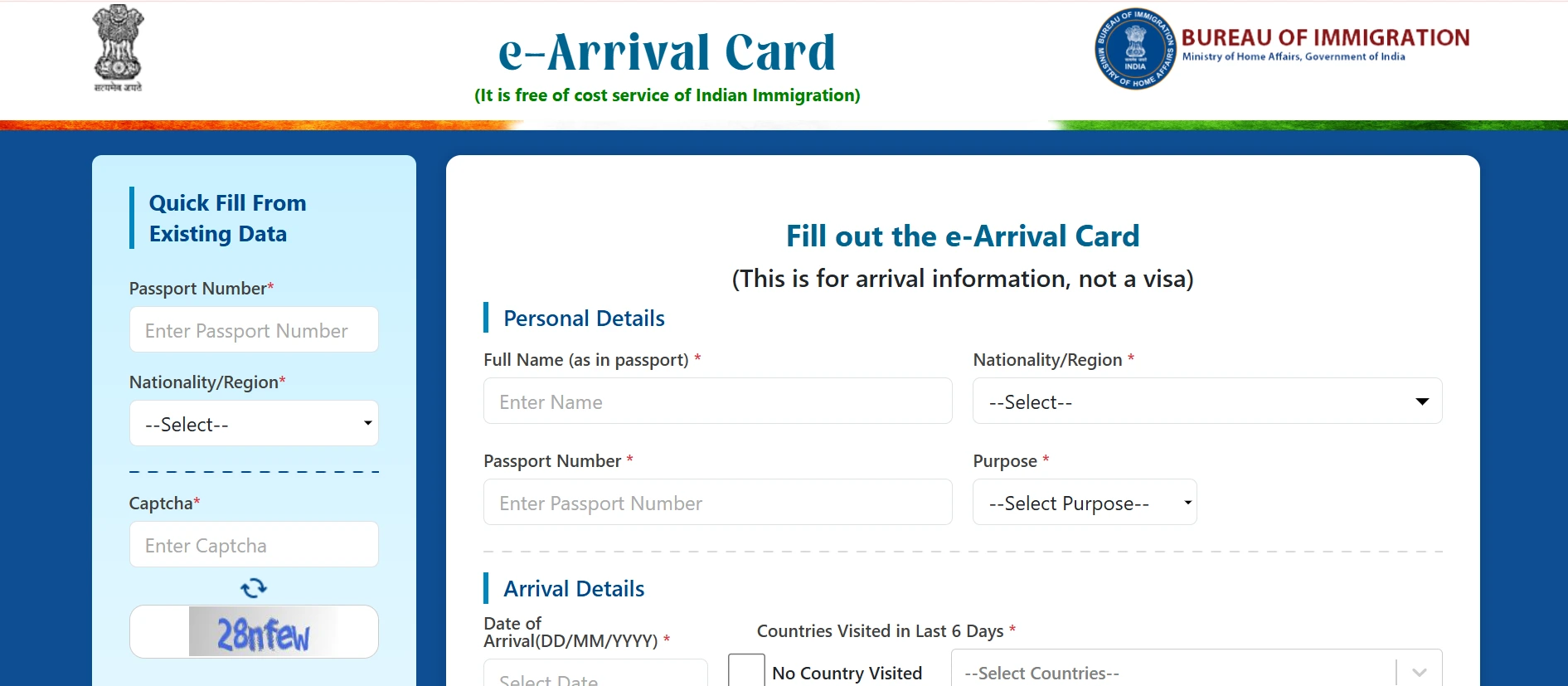
➤ Forgetting to complete a fresh e-Arrival Card before every single entry.
One completed form does not cover a multiple-entry visa's full validity — it's required before each individual arrival.
➤ Re-entering on a different passport without the original.
Even a valid new passport won't clear immigration alone if your ETA is tied to an old, renewed passport — both must travel with you.
➤ Applying under e-Tourist for a purpose that actually requires e-Business.
A common error among travelers making multiple entries for meetings or trade visits disguised as tourism, this is a category violation, not a technicality, and immigration can act on it.
➤ Assuming a new application ID means starting over on stay-day counts.
If your prior visa's 180-day annual usage was exhausted, applying for a brand-new e-Tourist Visa in the same calendar year doesn't reset that count — the cap is tied to the calendar year and your presence in India, not the visa document itself.
What Voids Your Re-Entry Rights(Even with an Approved India e-Visa)
Several situations can prevent you from using remaining entries on a valid India e-Visa:
⚠️ Overstaying your permitted duration: If you remain in India beyond your permitted stay, your re-entry rights on that visa are effectively voided. Deportation following an overstay also carries future India visa implications.
⚠️ Travelling on a different passport: If you have renewed your passport and attempt to enter using only the new one without the old passport, immigration may be unable to verify your ETA. Always carry both.
⚠️ Entering through a non-authorized port: As confirmed above, using an unauthorized crossing on any entry, including re-entries, is not permitted and will result in the entry being denied.
⚠️ Visa category violation: If a previous entry resulted in a category violation. For example, conducting business on a tourist visa, overstaying, terrorist or criminal activities; immigration retains discretion to deny subsequent entries even on the same visa.
The e-Arrival Card Applies to Every Entry on India e-visa
Since April 2026, all foreign nationals entering India must complete the digital e-Arrival Card within 72 hours before each arrival, via the official portal or the Indian Visa Su-Swagatam app. This applies to every entry on a multiple-entry visa, not only the first. Complete a fresh e-Arrival Card before each return journey to India, not once at the beginning of the visa's validity.
Planning multiple trips to India and unsure which visa category and duration suits your travel pattern?
At IVC Visas, our team reviews your category selection, travel purpose, and documents before submission — on both standard and express service. Check current pricing for your nationality, confirm eligibility, and start your application when ready.
Contact our team with questions before you apply. IVC guides India visa applicants around the globe 24x7.
Disclaimer: IVC Visas is an independent visa service provider. We assist with application preparation and submission to official government portals. Final visa approval decisions are made solely by Indian immigration authorities. All information is based on current regulations as prescribed by the Government of India, which may change. Always verify the latest requirements before travel.