Ladakh sits closer to the borders with Pakistan and China than almost anywhere else foreign tourists travel in India, and that geography shapes everything about how you're allowed to move through it. Your India e-Visa is the document that gets you into the country. It is not the document that gets you into Nubra Valley, Pangong Tso, or most of the landscapes Ladakh is actually known for. That's a separate system entirely, and eligible travelers from Kenya, Canada, Belgium or any part of the world, who don't sort this out before departure often discover it standing at a military checkpoint with the wrong paperwork.
This guide separates the two clearly: what your India e-Visa covers, what the Protected Area Permit covers, and what the trip actually looks like once both are in hand.
Start With the India e-Visa | This Part Is Standard
Ladakh doesn't require a different visa category from the rest of India. If you're travelling for sightseeing, trekking, photography, or general tourism, the India e-Tourist Visa is the correct category, exactly as it would be for Rajasthan or Kerala. There is no separate "Ladakh visa" and no additional visa-side documentation tied specifically to this region.
Learn how to apply for an India e-visa with IVC Visas, so your trip doesn't go unplanned:
What matters is timing your application around the season you're actually travelling in, since Ladakh's tourist window is narrower than most of India's. The high-altitude passes connecting Leh to Nubra Valley, Pangong Tso, and Tso Moriri are typically only open from late May through September, once winter snow clears. Outside this window, much of what draws foreign travelers to Ladakh simply isn't accessible.
You need to confirm your eligibility before booking anything, and apply with the season in mind. Real-world India e-Visa processing currently averages 8 to 10 business days, so apply at least 2 to 3 weeks before your intended arrival. If your Ladakh window is tight and closing, IVC Visas' express service prioritizes your application's preparation and submission on our side.
Reaching Leh: Where Your e-Visa Authorized Arrival Actually Happens
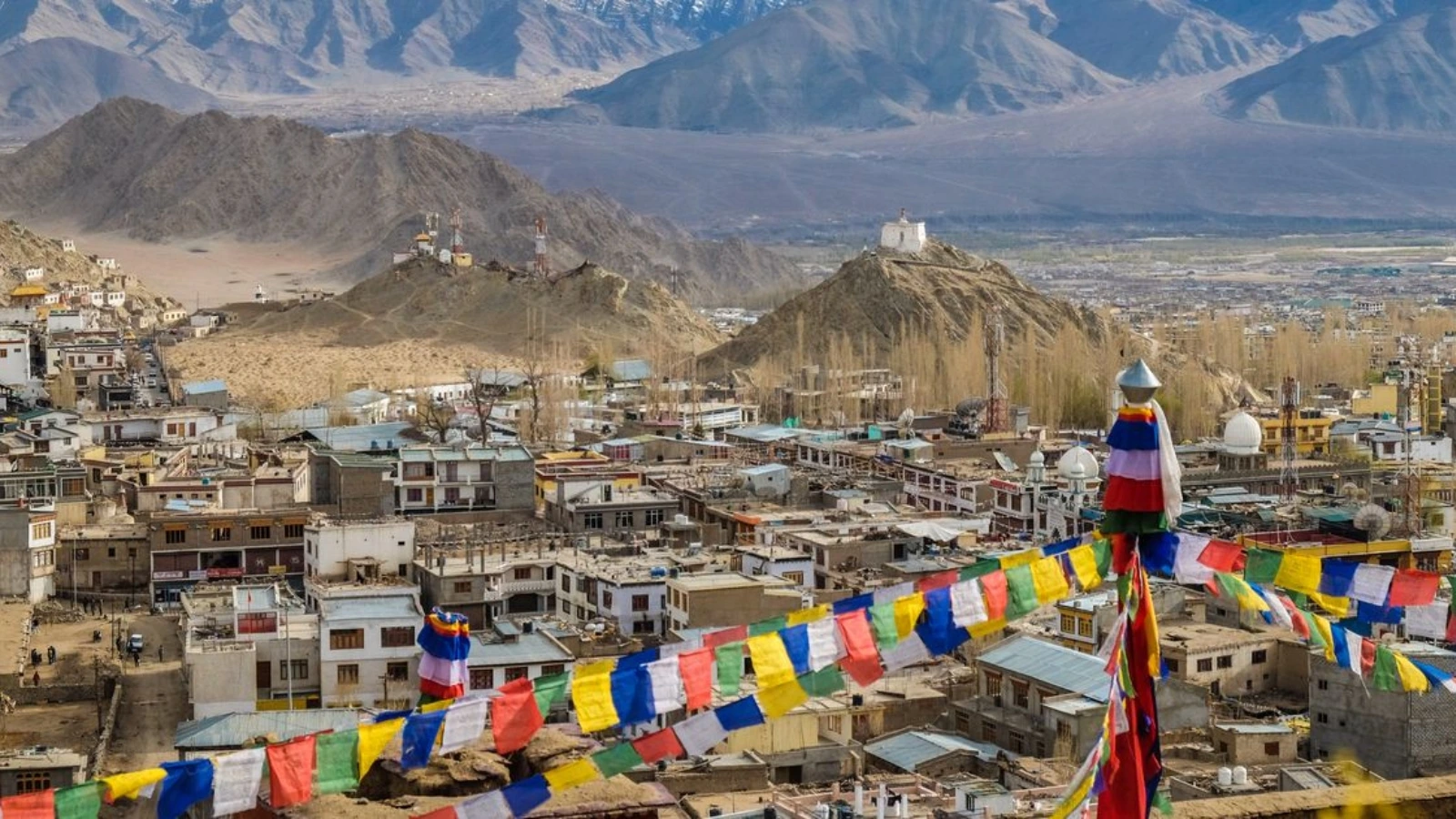
Leh itself is not among India's authorized international arrival airports for e-Visa holders. This catches some first-time travelers off guard, since it feels like the natural entry point given the trip is entirely about Ladakh. In practice, almost every foreign traveler's actual immigration clearance happens elsewhere, most commonly Delhi, with Leh reached afterward on a domestic connecting flight.
This means your India e-Visa's authorized port of entry needs to be one of India's designated international airports, checked against the authorized ports list, not Leh itself. Once you've cleared immigration and customs at that first airport, moving on to Leh is a purely domestic flight, no different administratively from any other internal connection within India. Build a reasonable buffer between your international arrival and your Leh connection, since immigration processing at a busy hub like Delhi can take longer than a tight layover allows for, particularly during peak season.
The Part Ladakh Adds: The Protected Area Permit
Here is where Ladakh genuinely differs from most other India destinations. A meaningful portion of what foreign travelers come to see sits inside officially designated Protected Areas under the Foreigners (Protected Areas) Order, the same legal framework that governs restricted travel in parts of Sikkim, Arunachal Pradesh, and the Andaman Islands.
Your India e-Visa authorizes entry into India. It does not authorize entry into a Protected Area. That requires a Protected Area Permit (PAP), applied for separately.
What is Protected Area Permit (PAP)?
A Protected Area Permit (PAP) is a special travel document required by foreign nationals to visit certain sensitive border regions and restricted areas in India under the Foreigners (Protected Areas) Order, 1958.
Which Areas in Ladakh Require a Protected Area Permit?
- Nubra Valley is typically the first Protected Area on most itineraries, reached by crossing the high pass at Khardung La. It's known for its cold desert landscape, double-humped Bactrian camels at Hunder, and monasteries set against sand dunes at altitude, an unusual combination most first-time visitors don't expect from the Himalayas.
- Pangong Tso is the lake most foreign travelers specifically plan the trip around, its water shifting through shades of blue depending on the light, and stretching partly into Chinese-administered territory, which is part of why the whole area sits under such close monitoring.
- Tso Moriri and Tso Kar sit further southeast, quieter and less visited than Pangong, and require the same permit given their proximity to the same sensitive border region.
- Beyond these three, the permit also covers the villages of Dah and Hanu, Turtuk, Chushul, Hanle, and stretches of the Indus River corridor beyond Leh's immediate surroundings.
- As of September 2026, foreign nationals are generally not permitted on the Umling La road (the world’s highest motorable pass at 19,024 ft). For Indian citizens the picture is different, they no longer need a separate permit for Umling La since March 2022, but the army still controls the Loma checkpost and can restrict civilian movement on any given day based on the border situation.
Where it doesn't apply: Leh town itself, and the main monastery circuit around it, including Thiksey and Hemis, fall outside the Protected Area boundary. Kargil similarly sits outside the restricted zone for general visits. The Zanskar Valley, reached via Kargil, is more remote and logistically demanding than Nubra or Pangong, but does not carry the same permit requirement for standard travel, though its isolation means road access itself, rather than paperwork, is usually the bigger planning factor.
❗One important distinction worth being clear on:
The Indian government has significantly simplified the system for domestic Indian tourists, who now pay an Environment Development Fee online rather than the older Inner Line Permit process. That simplification does not extend to foreign nationals. The Protected Area Permit remains a separate, more involved process, and this applies to OCI cardholders as well, not only India e-Visa holders.
How the Protected Area Permit Actually Works
Unlike your India e-Visa, the PAP process for foreign travelers is not something you complete independently online from home.
It is processed through a registered travel agent based in Leh, who submits your details on your behalf.
What you'll need to provide your agent:
- Your passport details and a copy of your passport bio page
- Your approved India e-Visa ETA
- Your specific itinerary, which Protected Areas you intend to visit and on what dates, since the permit is tied to a defined route and timeframe rather than issued as a blanket document
OR:
The Leh Hill Development Council has launched an official online portal at lahdclehpermit.in where both Indians and foreigners can apply for permits. The process involves registering on the portal, filling in your travel details, uploading required documents, and paying the fees online.
❗A practical update worth knowing: As of 2026, travelers arriving in Ladakh by air can now obtain their permit on arrival at Leh Airport itself, rather than only through advance arrangement. This has made the process considerably more workable for travelers flying in directly rather than arriving overland.
❗At the checkpoints: Ladakh's protected routes are monitored by army checkpoints, South Pullu, North Pullu, Khaltsar, and Mahe Bridge are among the most commonly encountered. Officers at each one will check your permit alongside your passport and visa. Carry multiple physical printed copies of your permit, since a copy is typically handed over and retained at each checkpoint rather than returned to you. Your original passport should stay on your person at all times, not packed away in luggage.
❗If you're self-driving or riding: An International Driving Permit is checked separately from your PAP by traffic police at these same stops, in addition to whatever documentation applies to the vehicle itself if rented locally.
What to Pack and Prepare For Beyond the Paperwork
Ladakh's practical demands go well beyond documentation, and a few of them are worth planning around before you leave home rather than discovering on arrival.
✔️ Cash and cards behave differently outside Leh.
ATMs exist in Leh town itself but become sparse or entirely absent once you're in Nubra Valley or near Pangong Tso, and cards are often not accepted at smaller guesthouses and dhabas along these routes. Withdraw and carry sufficient cash in Leh before heading out to the Protected Areas, since running short mid-trip has no easy fix.
✔️ Connectivity drops off almost entirely beyond Leh.
Mobile signal is unreliable in Nubra Valley and largely absent around Pangong Tso, which affects everything from staying in touch with home to accessing digital copies of your documents. This is the practical reason to carry physical printed copies of your India e-Visa ETA and your Protected Area Permit rather than relying on your phone.
✔️ Cold-weather gear is necessary even in the height of summer.
Leh's daytime temperatures in June and July can feel comfortable, but altitude changes that quickly. Pangong Tso and the high passes routinely drop well below what the season back home would suggest, particularly after sunset. Layered clothing, a proper insulated jacket, and warm sleeping gear if staying overnight near the lake are standard preparation, not overcautious packing.
✔️ Basic medication for altitude is worth carrying, alongside a plan to acclimatize properly in Leh before pushing on to higher elevations, covered in more detail below.
What Your Pre-Departure Checklist Actually Looks Like
➤ Before you apply:
Confirm your travel window falls within Ladakh's accessible season, roughly late May through September for the high passes. Decide which specific areas you intend to visit, since this shapes both your e-Visa application timing and your permit request later. Check your eligibility for the standard India e-Tourist Visa.
➤ Before you submit:
Complete your India e-Visa application with accurate passport details, a compliant photograph, and the correct travel dates. This part follows the same process as any other India destination, there's no Ladakh-specific field on the e-Visa form itself.
➤ Before you board:
Confirm your ETA shows Granted status. Complete the mandatory e-Arrival Card within 72 hours of arrival, through the official portal or the Indian Visa Su-Swagatam app. Arrange your Leh-based travel agent in advance if your itinerary includes Nubra Valley, Pangong Tso, or any other Protected Area, so the permit process isn't something you're scrambling to start after you've already landed.
The Practical Realities Worth Knowing Before You Fly
📢 Altitude comes first, itinerary second.
Leh sits above 3,500 metres, and altitude sickness is a genuine risk for travelers arriving from sea level. Most experienced travelers and local operators recommend at least a full day of rest in Leh before attempting any of the higher passes leading to Nubra Valley or Pangong Tso, both of which climb considerably higher still. Build this into your itinerary rather than treating it as optional.
📢 Solo travel has additional friction.
Foreign nationals traveling entirely alone through Protected Areas have historically faced more restriction than those traveling in a pair or small group, and this has shaped how agents structure permit applications. If you're planning to travel solo, raise this directly with your Leh-based agent early, rather than assuming it works identically to a group booking.
📢 Weather changes plans, not paperwork.
Roads through the high passes can close on short notice due to weather even within the official season. This affects your itinerary, not your visa or permit validity, but it's worth building flexibility into your schedule rather than a tightly fixed day-by-day plan.
Getting the First Document Right Sets Up Everything Else
Ladakh rewards travelers who plan properly and punishes those who don't, and the visa side of that planning is where it starts. An approved India e-Visa is the foundation everything else in this trip sits on top of, your Protected Area Permit, your itinerary with a Leh-based agent, and your actual days on the ground all depend on that first document being correct and confirmed well before you land.
At IVC Visas, we review your application, photo, and documents before submission, on both standard and express service, so a Ladakh-bound trip built around a narrow seasonal window doesn't get derailed by an avoidable visa error.
Start your India e-Visa application with enough runway to sort out your Leh permit arrangements properly afterward.
Contact our team if you have questions about timing your e-Visa application around Ladakh's travel season.
Disclaimer: IVC Visas is an independent visa service provider. We assist with application preparation and submission to official government portals for India e-Visa applications. Protected Area Permits for Ladakh are a separate process handled through registered travel agents in Leh and are outside the scope of what IVC Visas processes. Final visa approval decisions are made solely by Indian immigration authorities. All information is based on current regulations as prescribed by the Government of India, which may change. Always verify the latest requirements before travel.